| Partial Solar Eclipse of Wednesday 12 August 2026 |
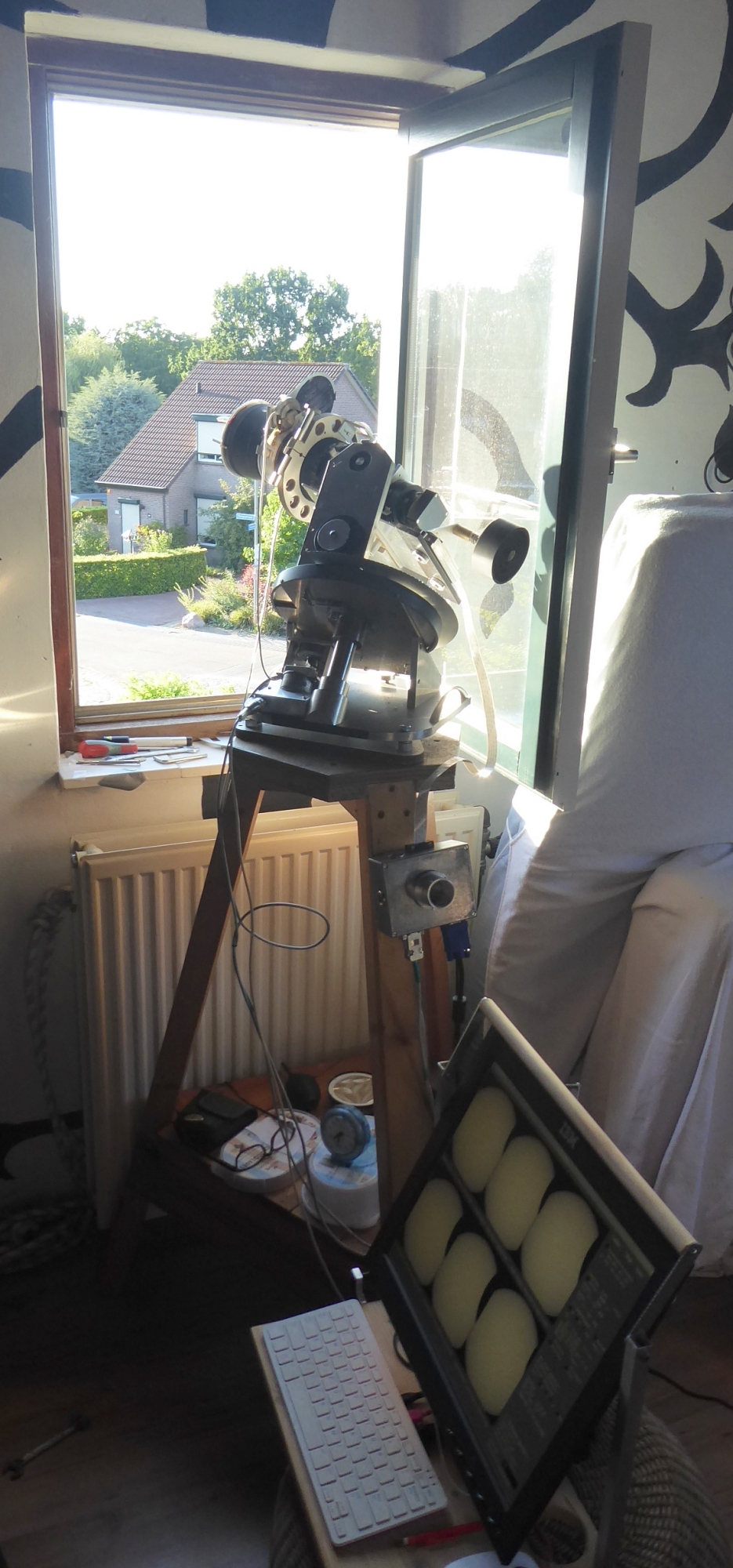
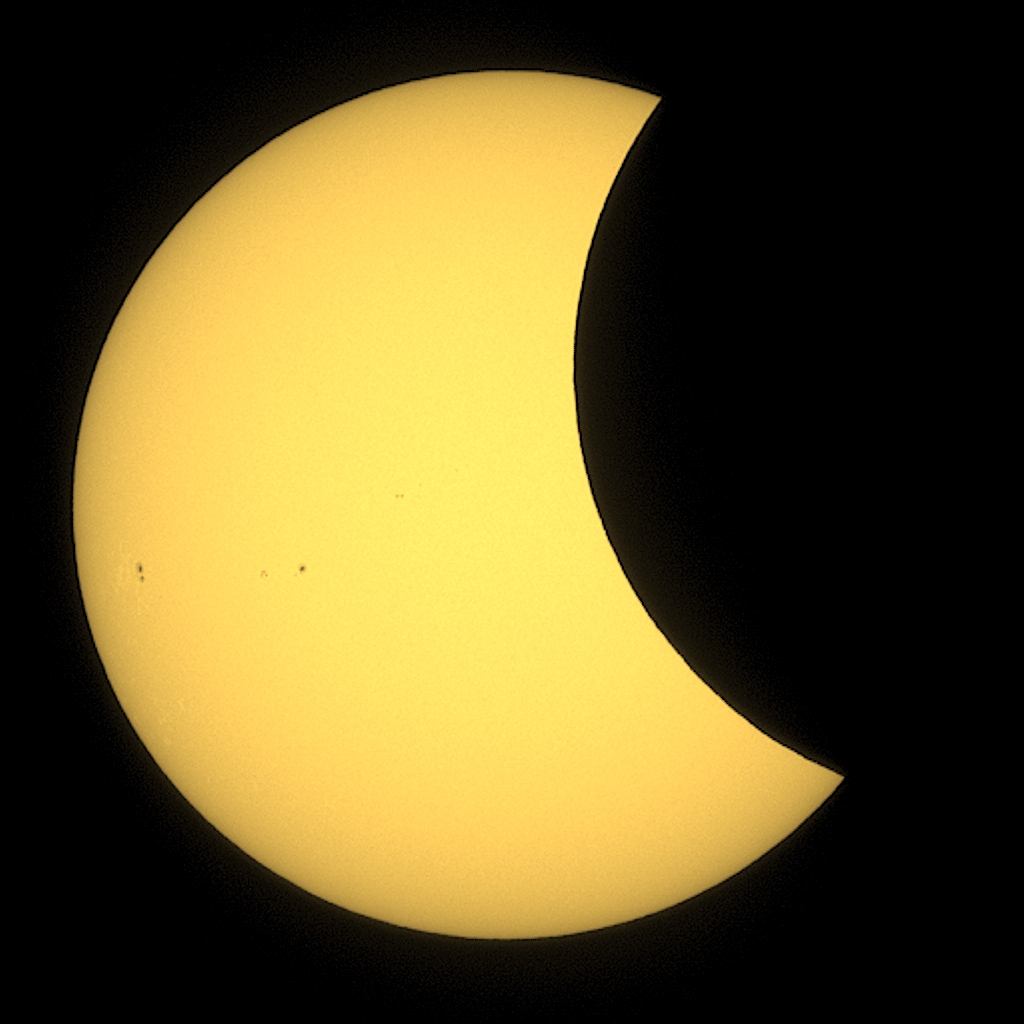
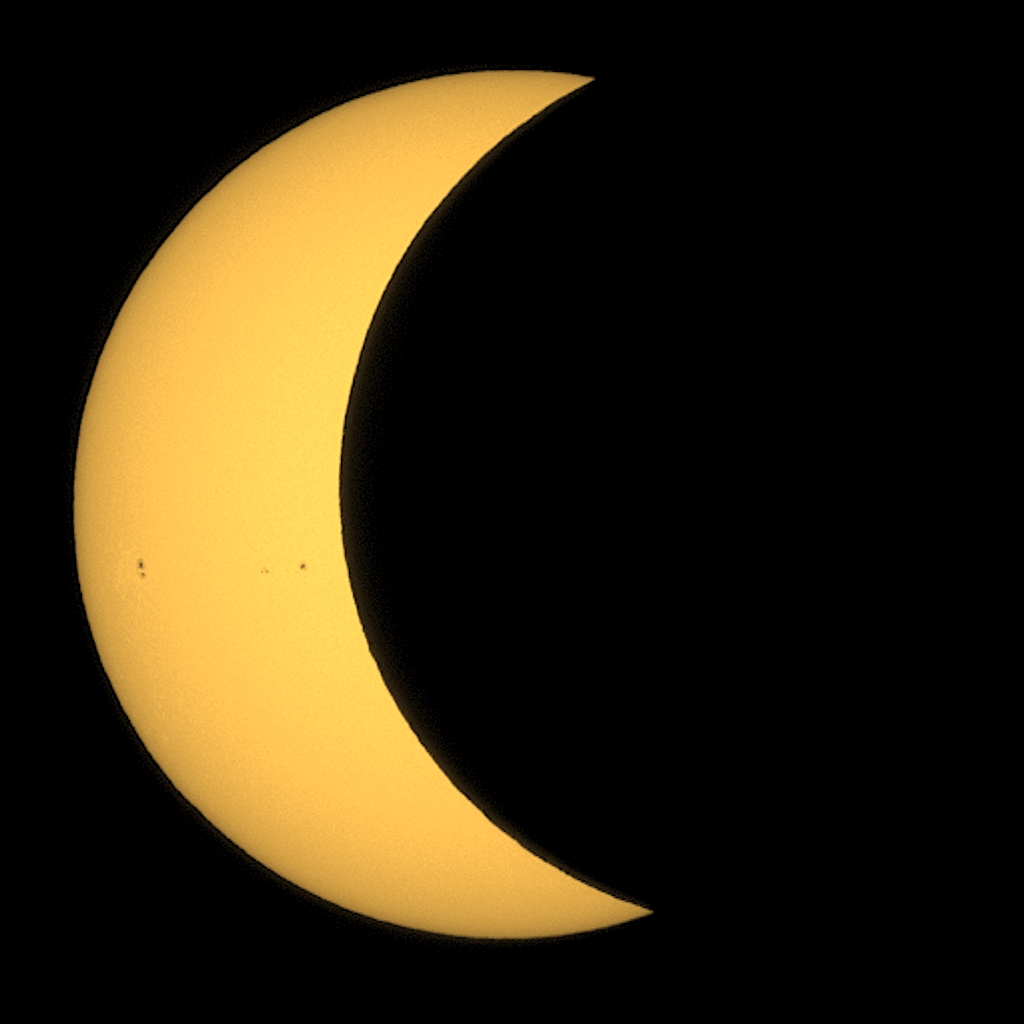
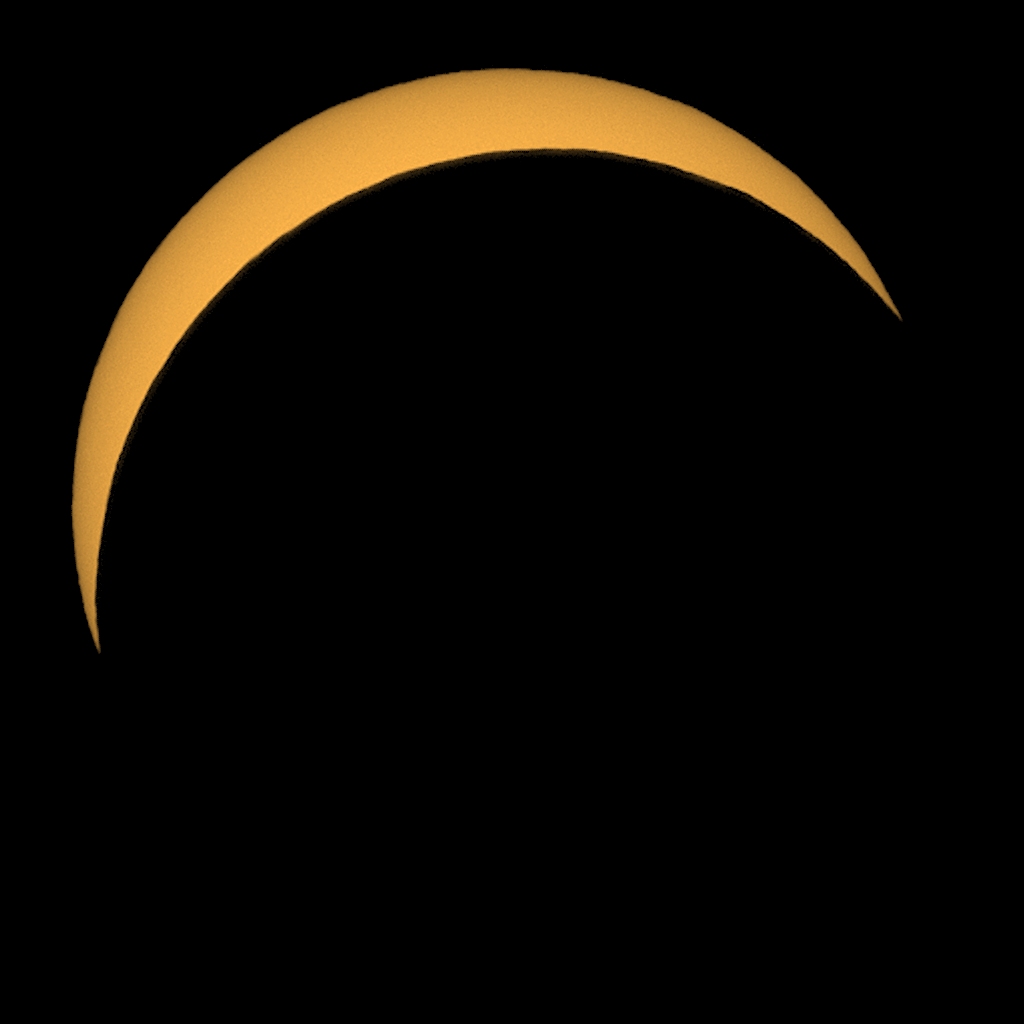
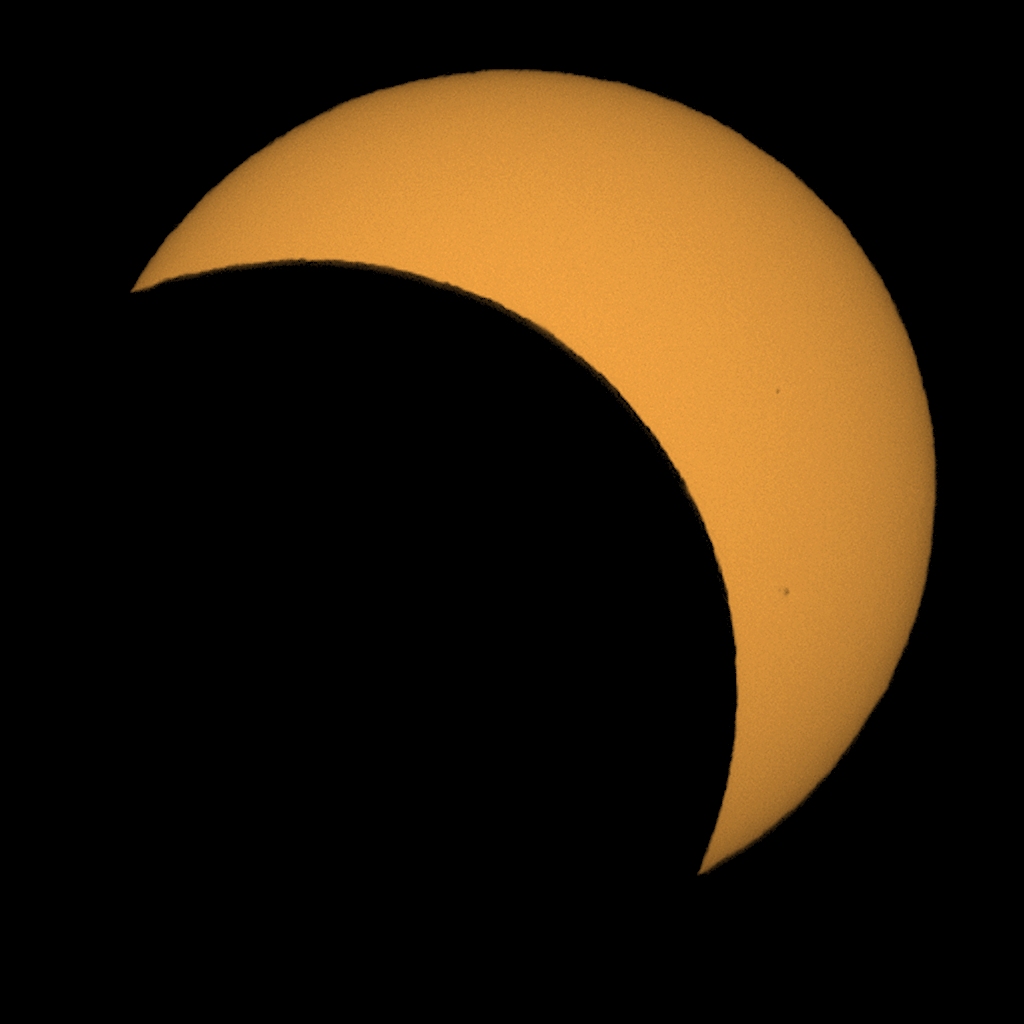
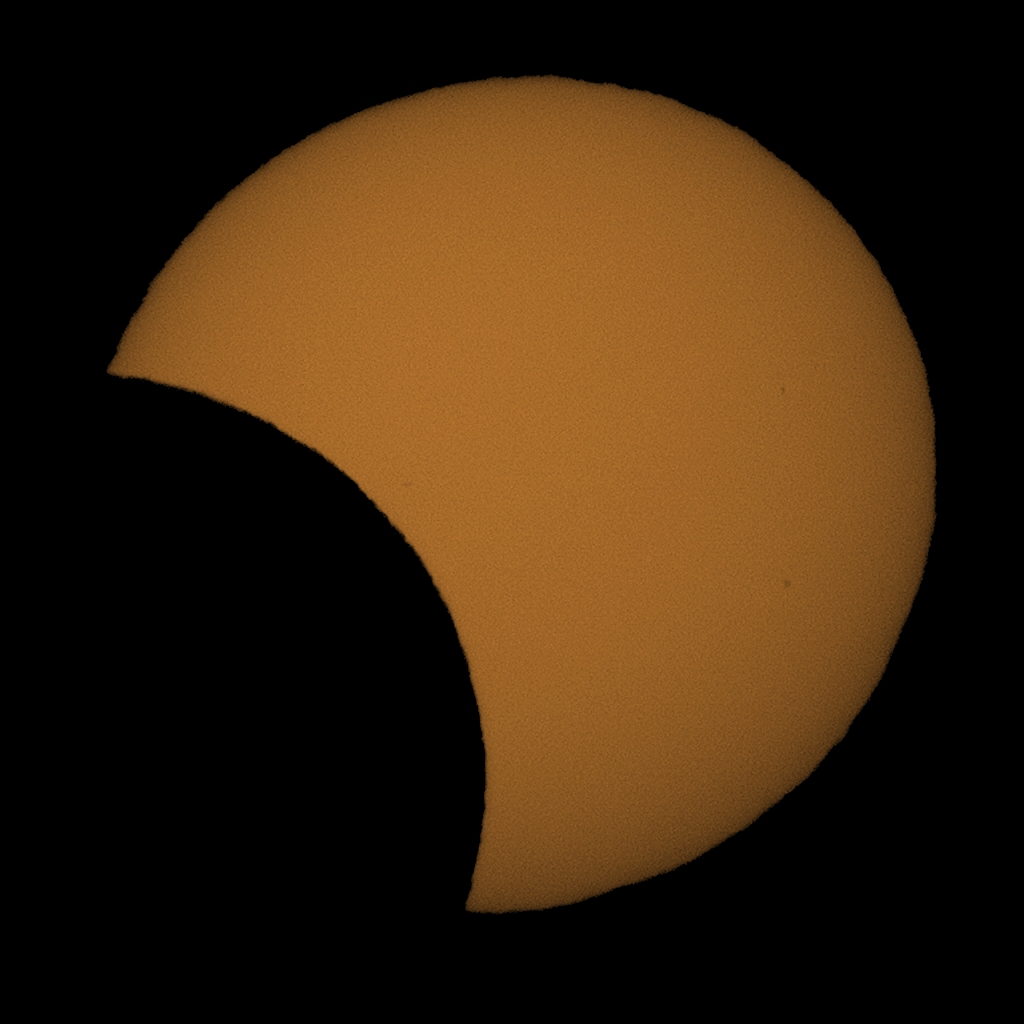
From my location at 51.6 degrees north and 5.9 degrees east, the partial solar eclipse of 12 august 2026 took place low in the West. Maximum occultation (88%) occurred at a height of approximately 8 degrees above the horizon. To photograph the main part of the sequence an improvised setup in the attic was used, viewing WNW through a top-window. It allowed for photographing the major part of the eclipse until some 34 minutes after the maximum when it was obscured by a row of distant trees. The setup comprised a small fork-mount, an f=300mm telephotolens at f/D=8 and Raspberry Pi HQ-camera, resulting in a 1.2x0.9 degrees field of view. The camera's standard Hoya filter is replaced by a Baader Planetarium L-filter and the telephotolens was covered with a Baader Planetarium AstroSolar Film with OD=3.8. A total of nearly 100 Images were acquired, one every minute, with a 0.6 msec exposure time. G and B channels were added (the R-channel was omitted, being slightly out-of-focus with this (East-German made) Leica objective). Processing comprised of aligning the individual images, sharpening them with a Laplace kernel, artificially colouring and adapting grey-level setting for partly compensating the dwindling intensitiy (a factor ~10) and changing colour of the setting sun. |


 |
 |
|
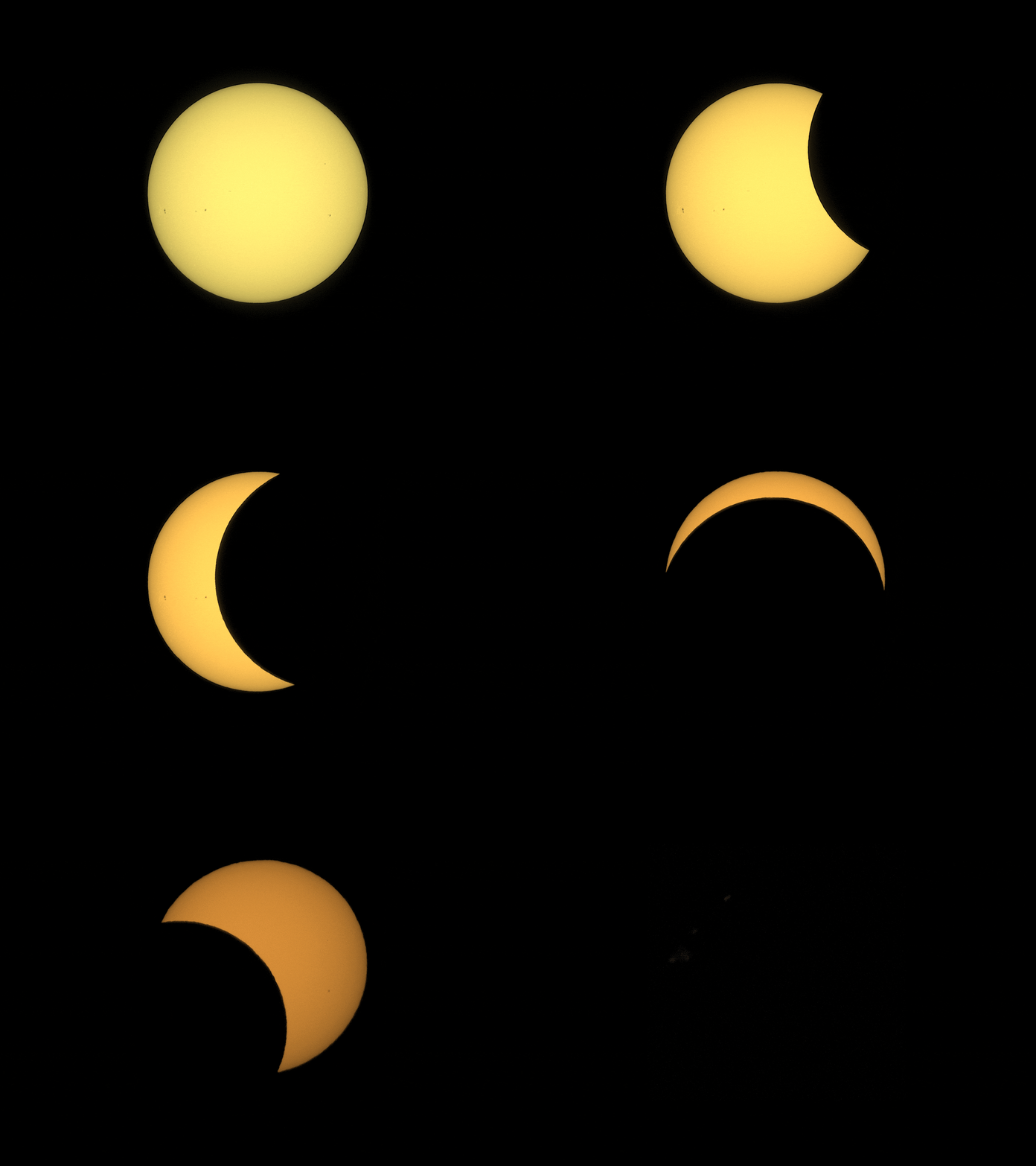
94 images, from 19u16 till 20u55 CEST assembled into a GIF movie Celestial north is up. (Click on de the GIF for a full size version) Some separate frames: 19u24m, 19u40m, 19u56m, 20u12m, 20u28m, 20u45m. |
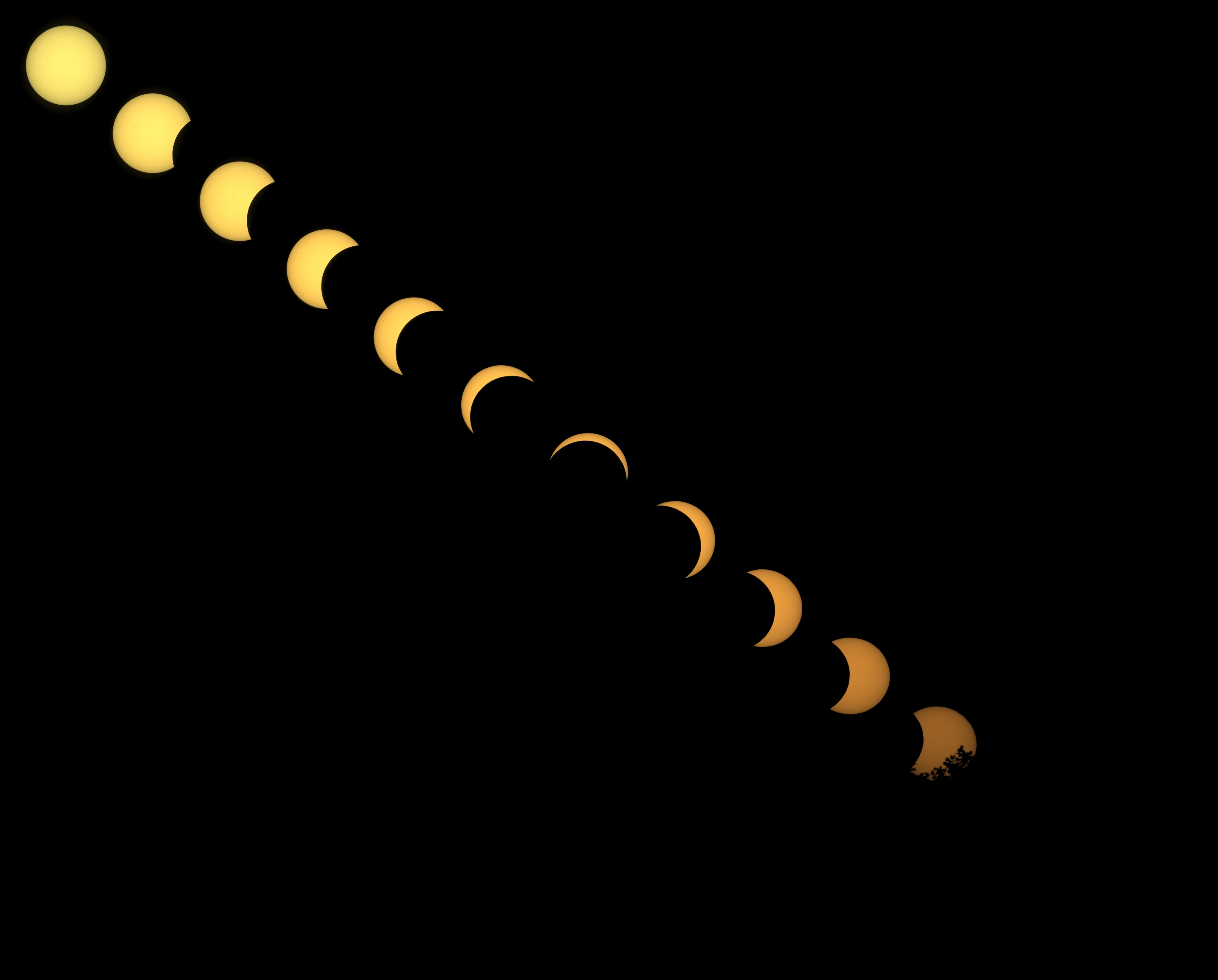
A selection of frames separated by approximately 8 minutes assembled in a collage mimicking the observers view from my location, where the angle of the ecliptic is ~38 degrees. (In reality frames separated by 8 minutes would be 2 degr. apart, i.e. 4 Sun diameters. In this collage they are separated by 0.7 degr.) (Click on de the image for a larger version) |
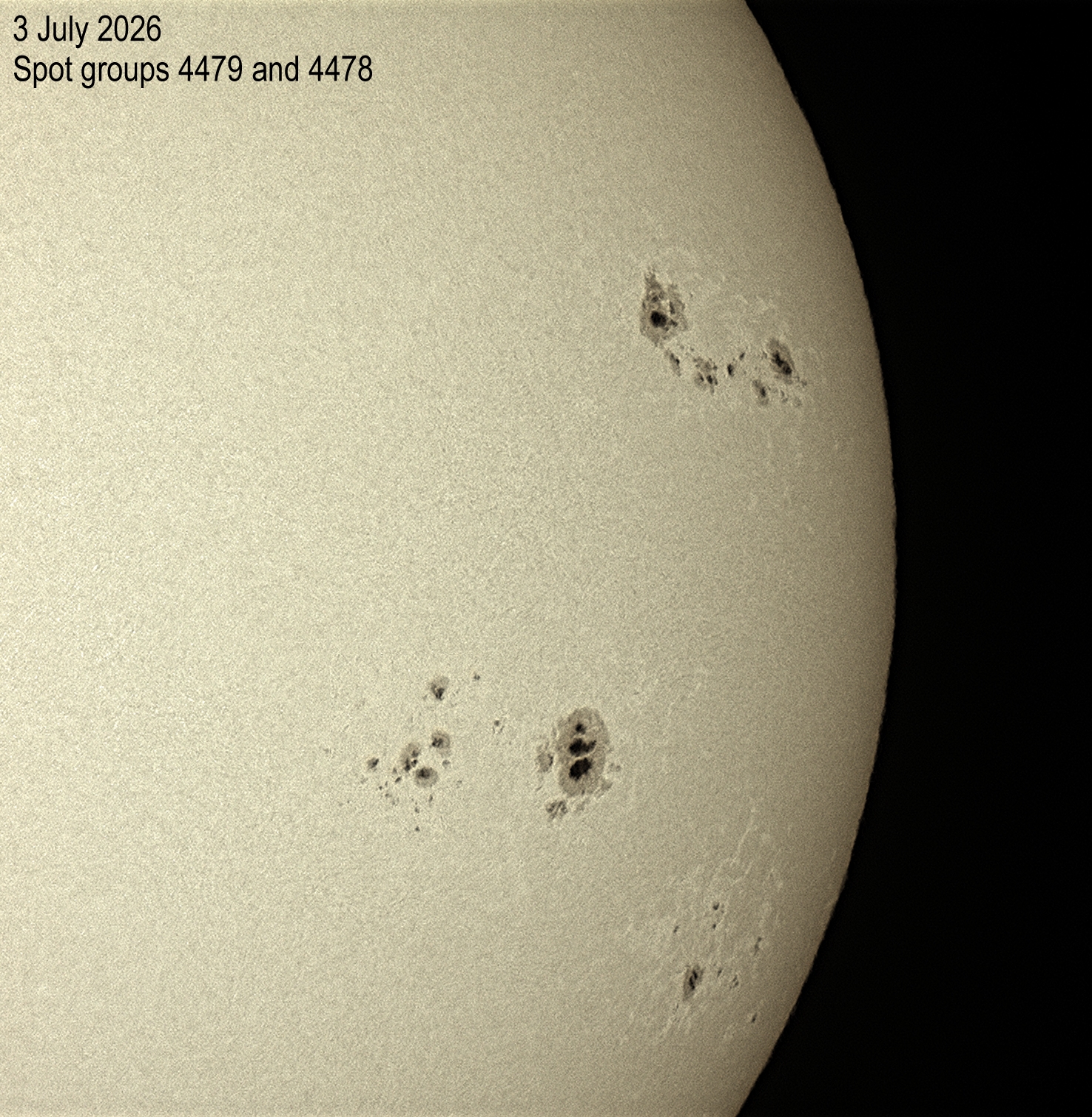
| Sun spot groups 4478 and 4479, 1 and 3 July 2026 |
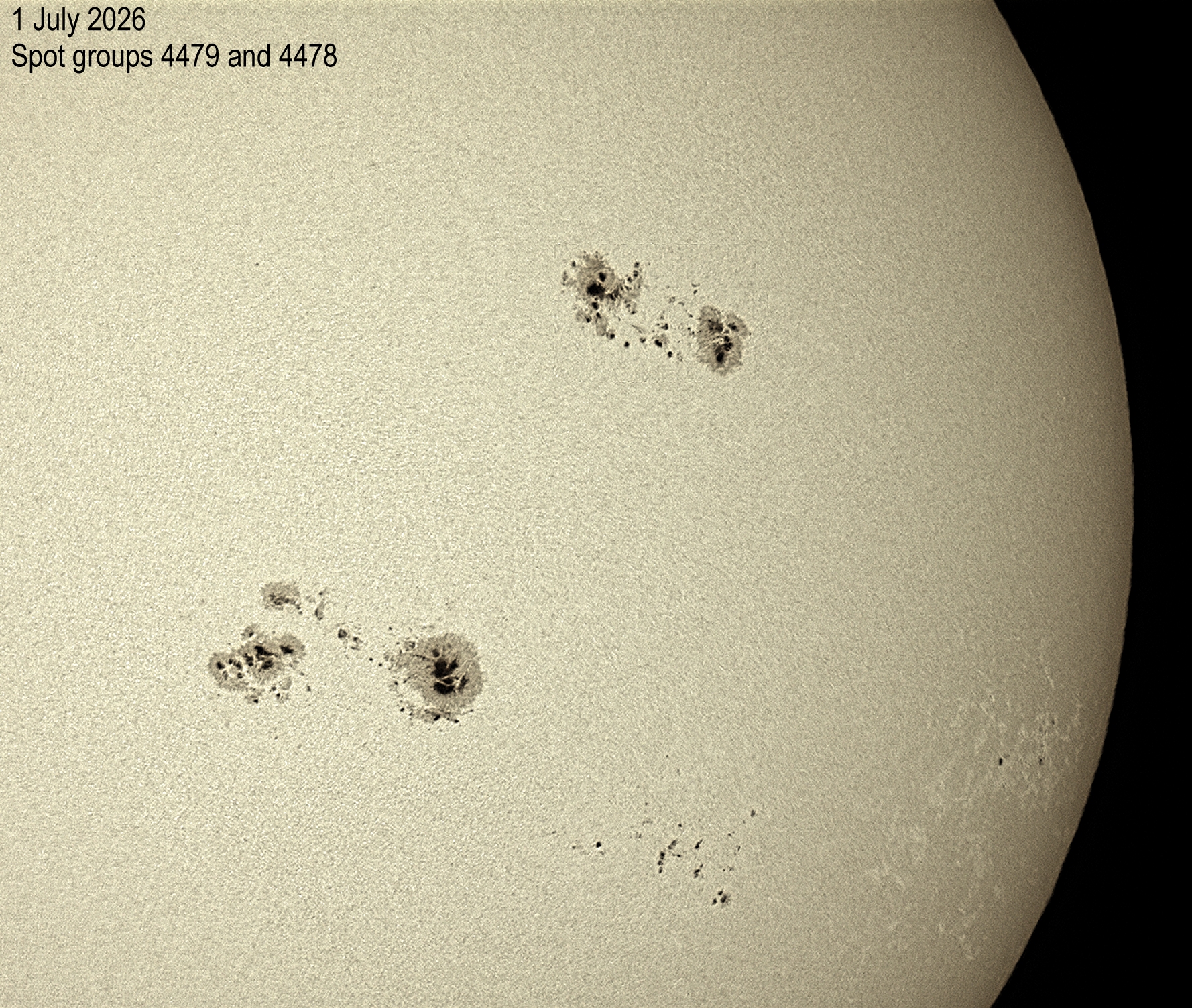 |
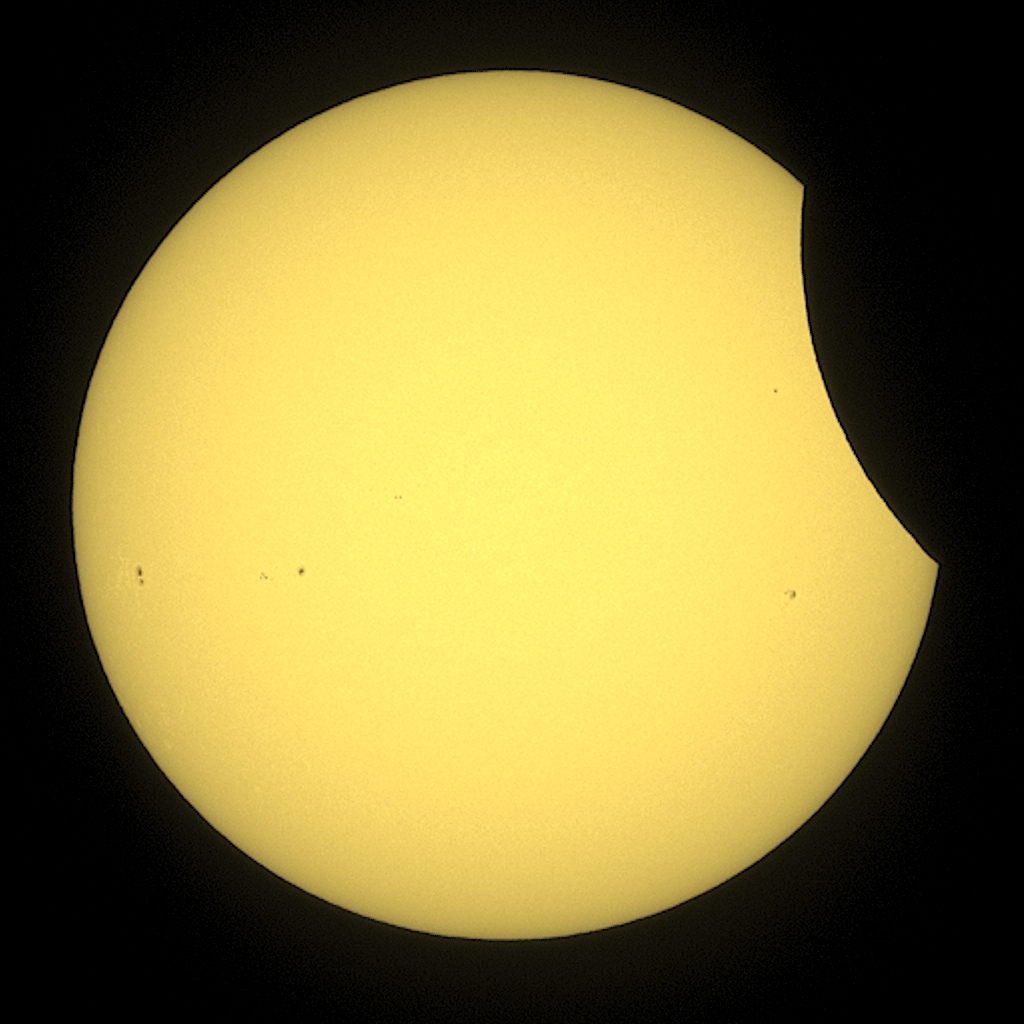
1 July (left) and 3 July 2026. f=950mm, f/D=6.3 Newton telescope with a Baader Planetarium AstroSolar Film OD=3.8 . Raspberry Pi HQ camera in prime focus. Image mode: 2028x1520 pix, RAW 12bit mode. The camera's standard Hoya filter is replaced by a Baader Planetarium L-filter. Exposure time: 0.35 msec. Images are slightly unsharp masked and sharpened with a Laplacian filter. L component is R+G+B and the RGB components are scaled such that a slightly yellowish color results. |
 |
| Moon, color enhanced, 24 and 29 April 2026 |
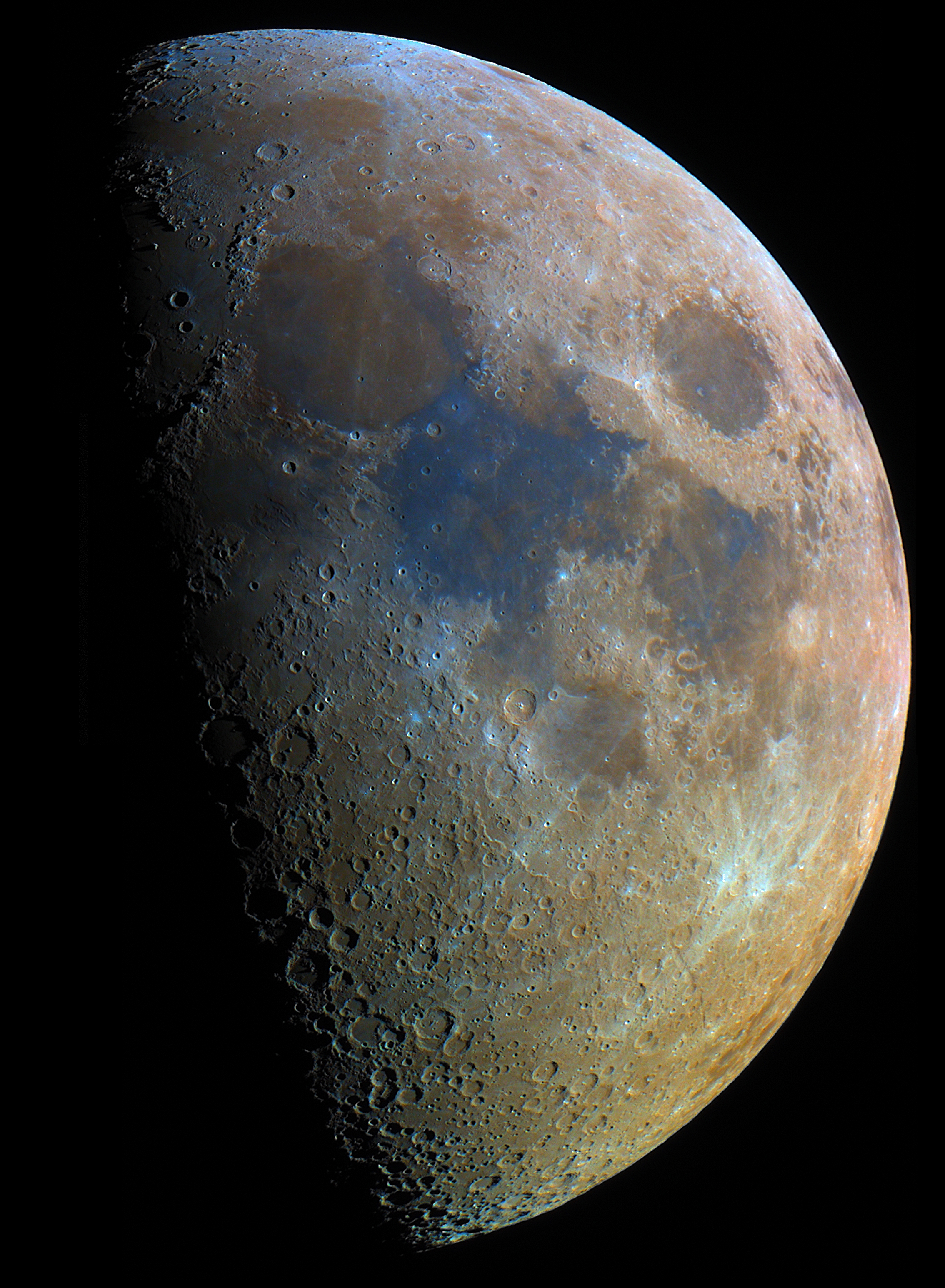 |
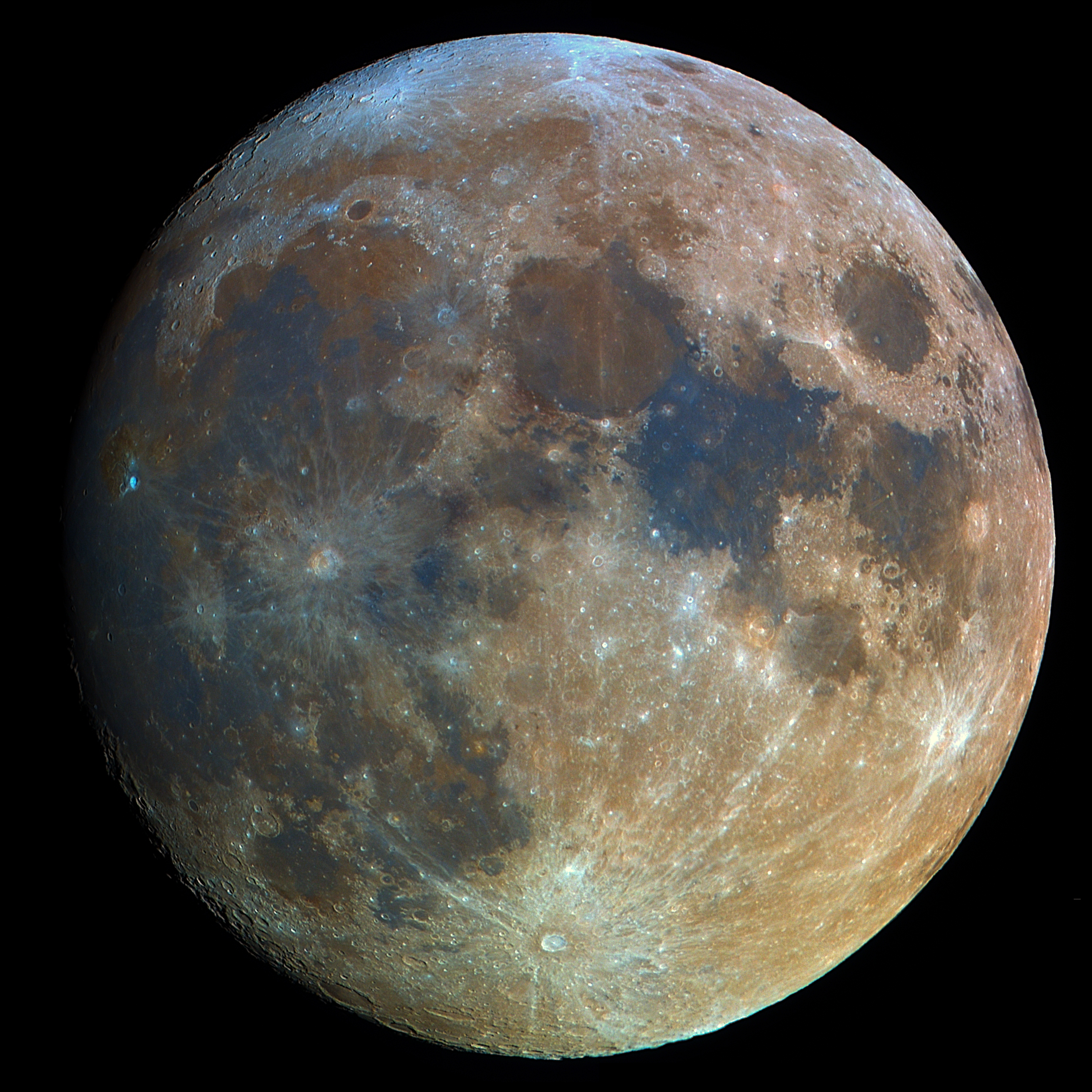
Raspberry Pi HQ camera in 2028x1520 pix, RAW 12bit mode. The camera's standard Hoya filter is replaced by a Baader Planetarium L-filter. Exposure time: 15msec per image. Image left (24 Apr 26): Three vertically stitched images. Image right (29 Apr 26): Mosaic of six images. L component is R+G+B of the best image and sharpened using a 4-connected Laplacian kernel (left) or Laplacian-of-Gaussian kernel (right). The RGB components are an average of 5 images. This reduces color noise. Color enhancement: After balancing R, G and B image intensities, to achieve a neutrally balanced RGB-image, color differences are enhanced according: R=RGBGain*(R-L_rgb)+L_rgb; G=RGBGain*(G-L_rgb)+L_rgb; B=RGBGain*(B-L_rgb)+L_rgb; where RGBGain=15 and L_rgb=0.299*R+0.587*G+0.114*B (following the eye sensitivity response). |
 |
| Occultation of Venus in broad daylight, 19 september 2025 |
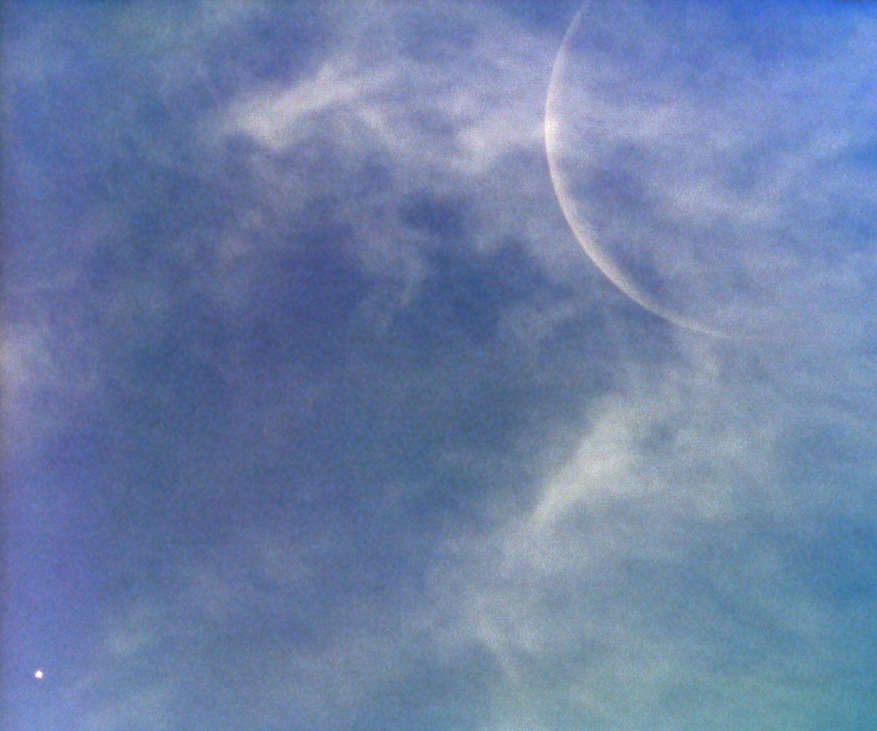
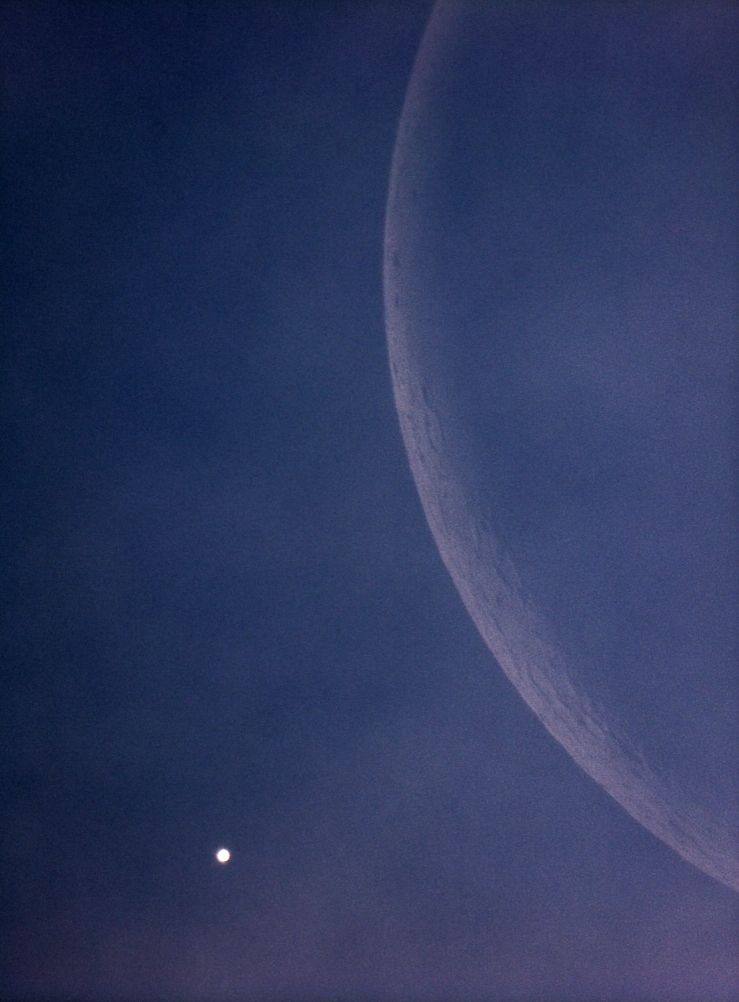
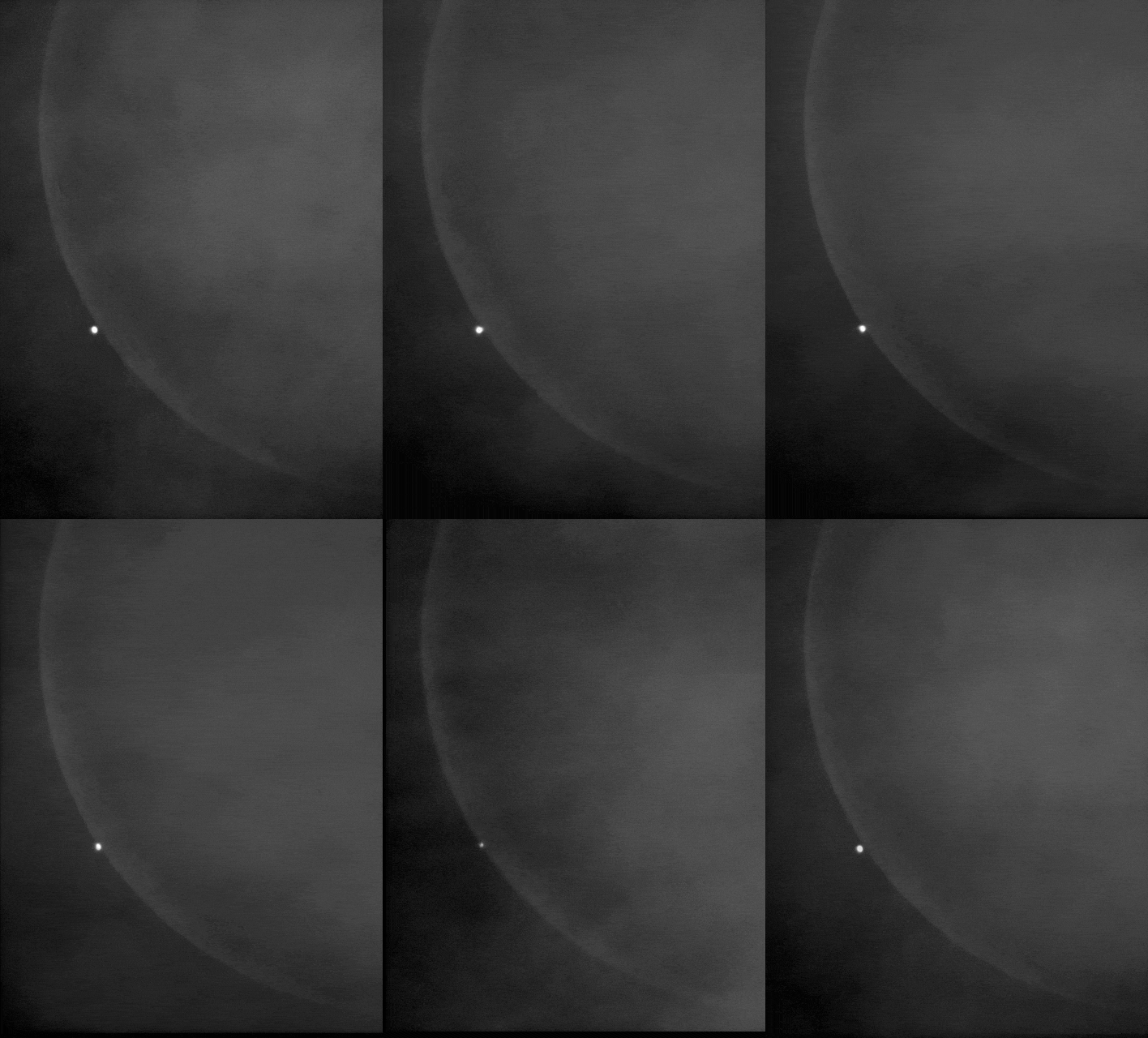
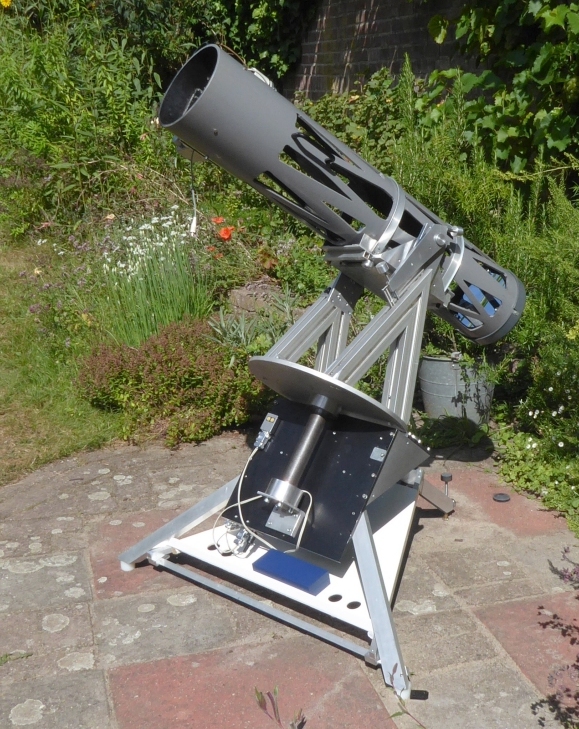
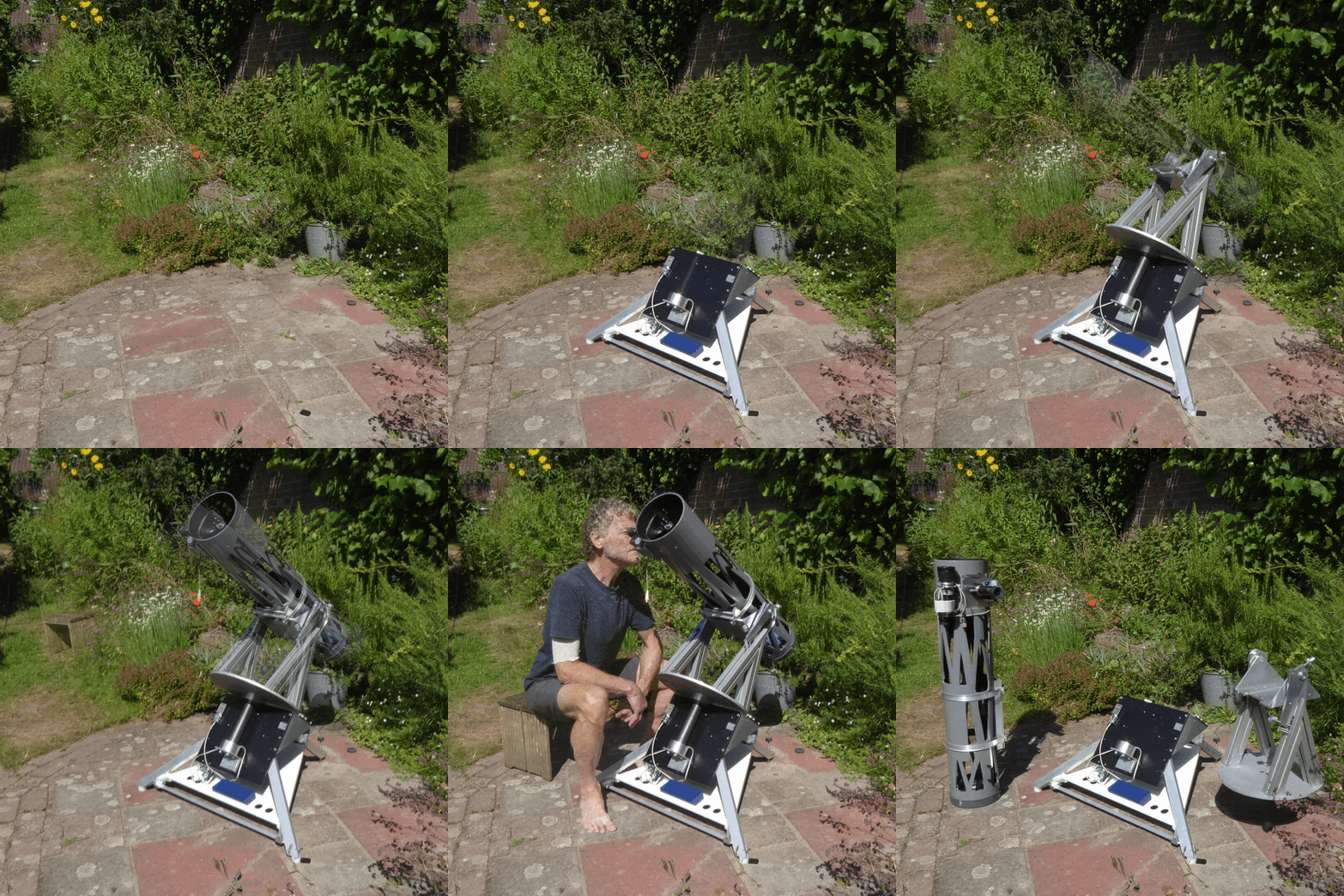
The 19 september 2025 occultation of Venus took place in broad daylight, starting at my location 11h59 UTC and ending 13h15 UTC. Unfortunately some annoying cirrus clouds showed up and increasingly obscured the celestial scene. I used a Raspberry Pi HQ-camera on, initially, a f=300mm tele-objective at F#5.6 and later on my f=950mm, f/D=6.3 Newton telescope to grab some images during the few moments of thinner sections of cirrus. The images are in part corrected for the offset caused by the brightness of the sky. The final frames before full occultation (covering 45 seconds) are assembled in a short gif (green component only). |
 |
 |
 |
||
|
09h44 UTC 2 hours before occultation Raspberry Pi HQ camera Leica f=300mm obj. at f/D=5.6 on small Fork-mount Baader L-filter (IR-cuttoff) Exposure time: 5 milliseconds |
11h41 UTC 18 minutes before occultation Raspberry Pi HQ camera 15cm Newton at f/D=6.3 (f=950mm) on NEW Fork-mount Baader L-filter (IR-cuttoff) Exposure time: 4 milliseconds |
11:58:51 TILL 11:59:35 UTC GIF covering 45 seconds before full occultation (Green component only) (Note: Bad seeing and severe cirrus) Raspberry Pi HQ camera, f=950mm Newton at f/D=6.3 on NEW Fork-mount (gif) Baader L-filter. Exposure: 4 msec/frame |
||
| Eclipse of the Moon, 7 September 2025 |
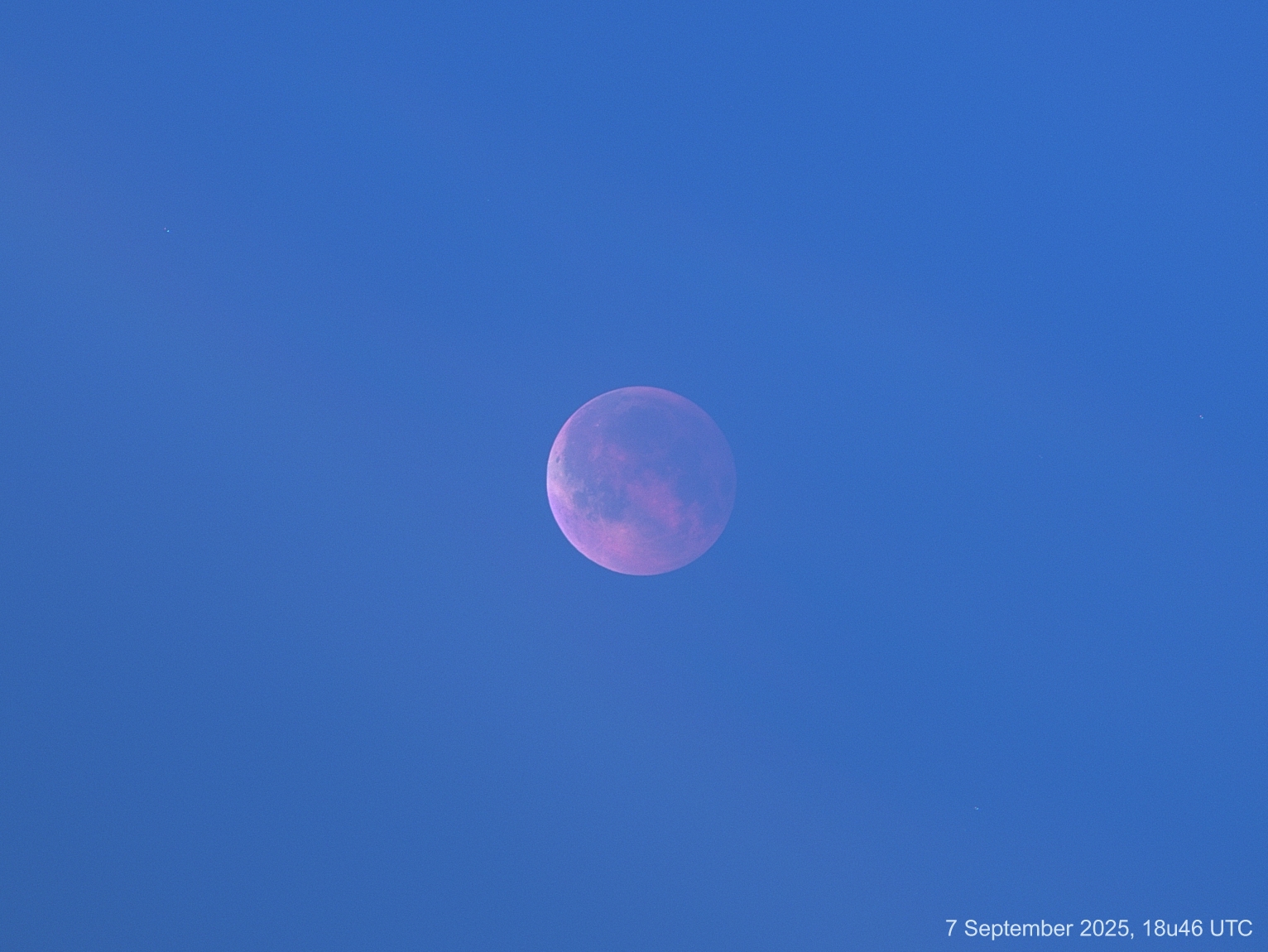
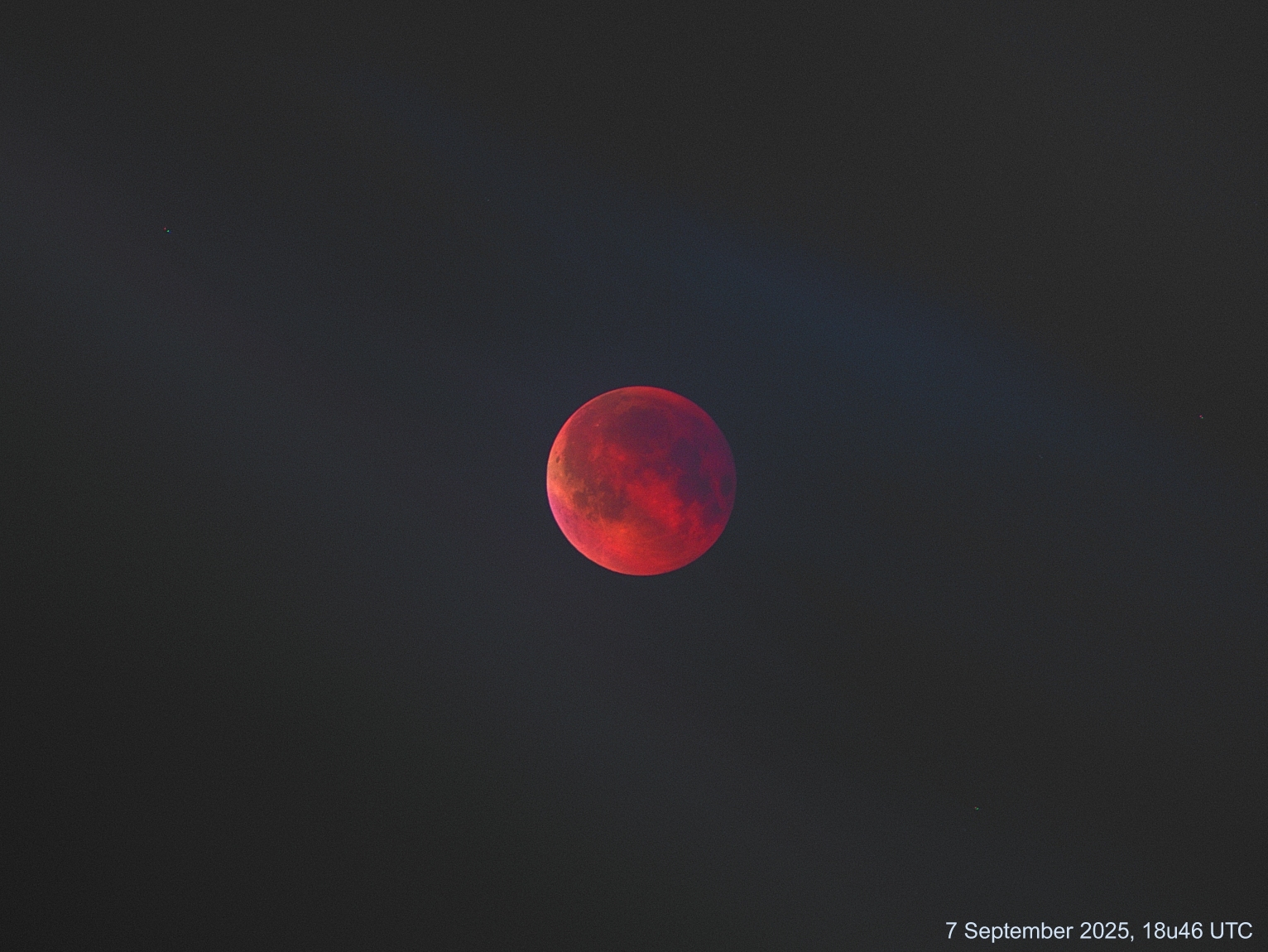
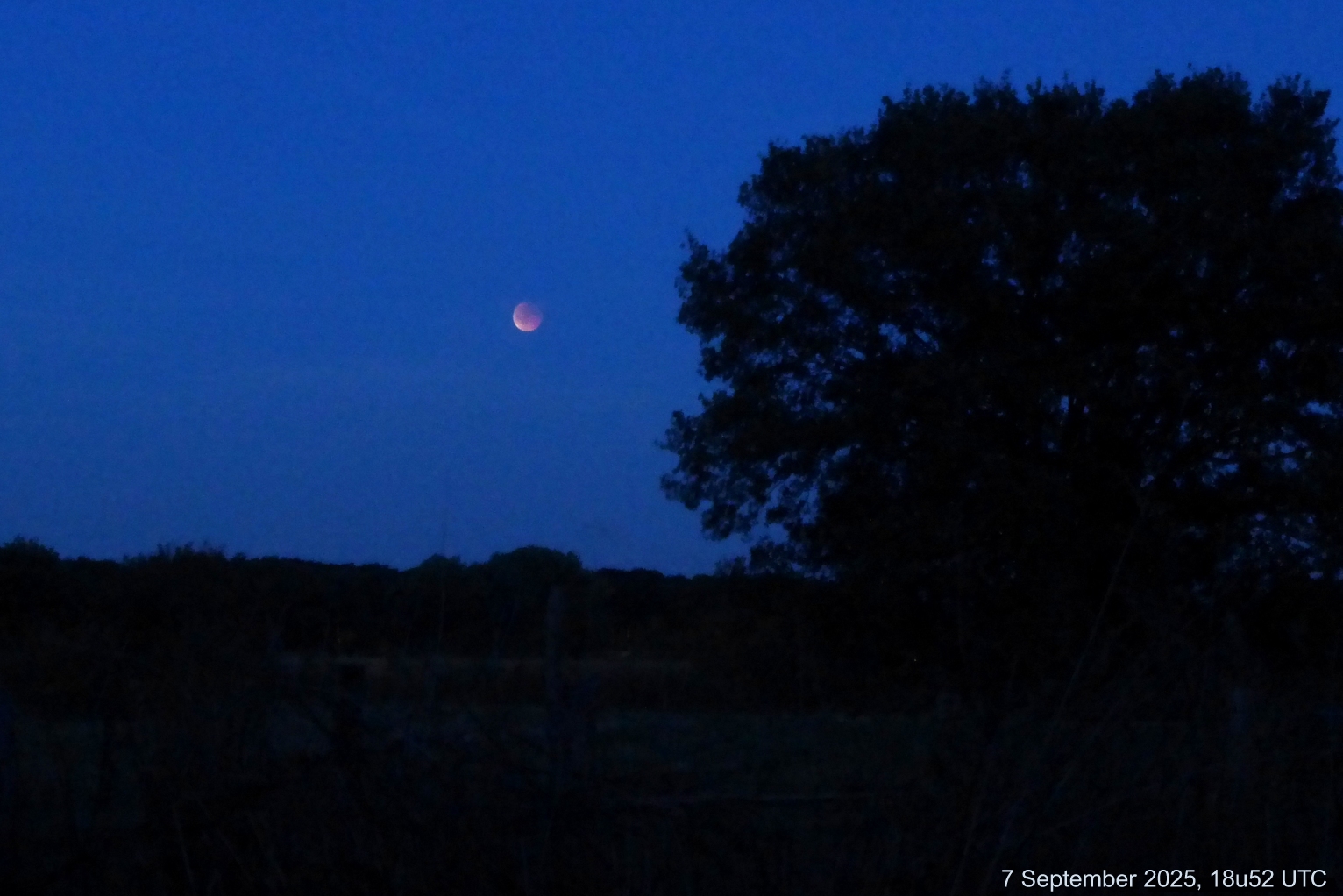
From my location the Moon rose above the horizon at the peak of the eclipse (18h12). Clouds near the horizon blocked the view until around 18h40 when the Moon became increasingly visible through thinning clouds. The twilight still caused a significant blueish background partially drowning the weak light from the eclipsed Moon (left image: taken around 18h46, only 8 minutes before the end of totality). Subtracting this background from the RGB-images gives a vivid impression of what the Moon looked like (second image from the left). |
 |
 |
 |
 |
MOON 18h46 UTC 8 min. BEFORE end of totality 4.7 degrees above horizon FTF2020M CCD camera Leica f=300mm obj. at f/D=4.0 on small Fork-mount Edmund Optics RGB filters. Exposure: 5 seconds each. |
MOON 18h46 UTC Same as image on left but background subtracted. |
2 min. BEFORE end of totality 5.5 degrees above horizon Panasonic TZ70 compact camera Aperture: 4.0 Exposure: 2 seconds at ISO 400 |
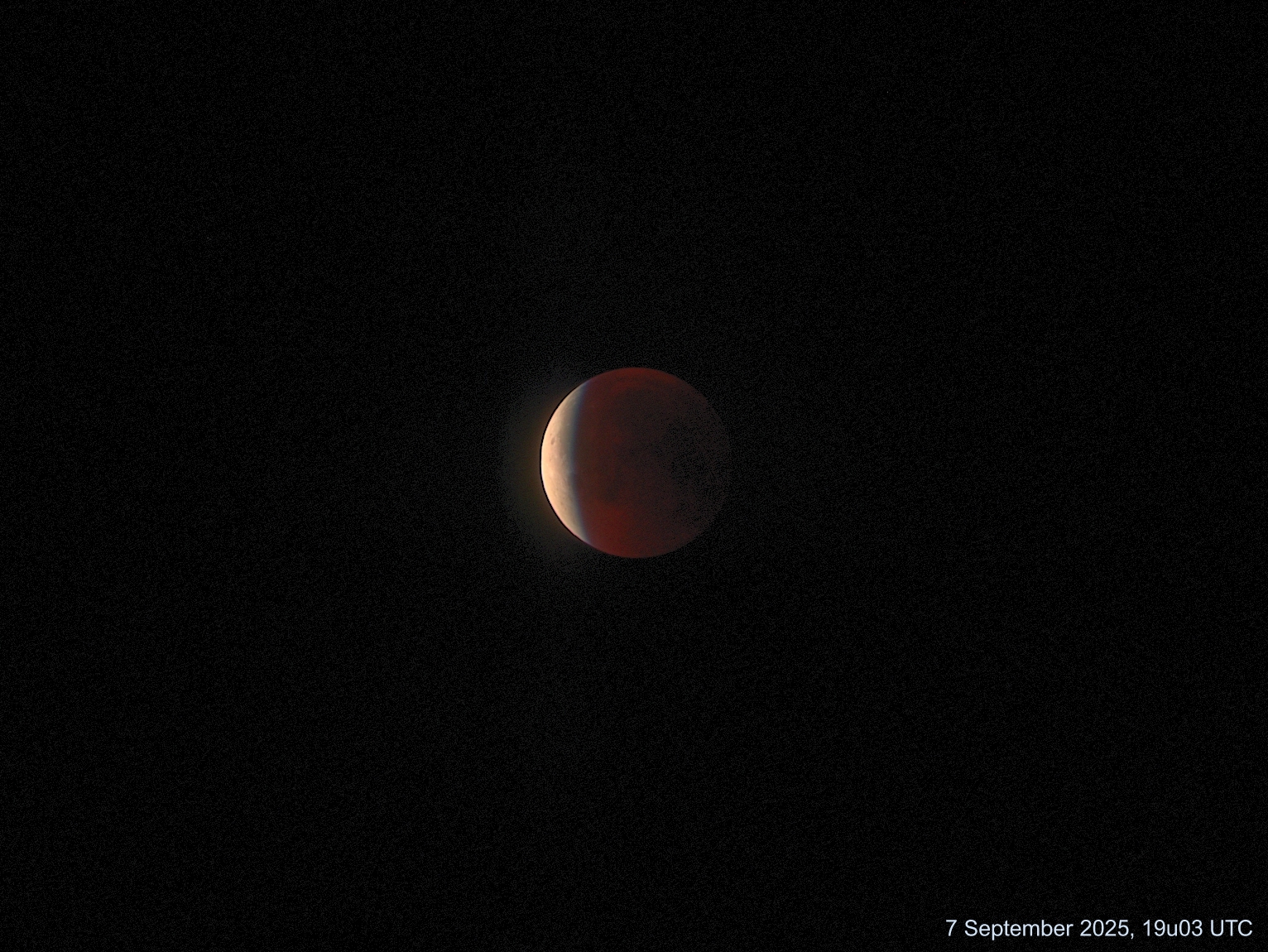
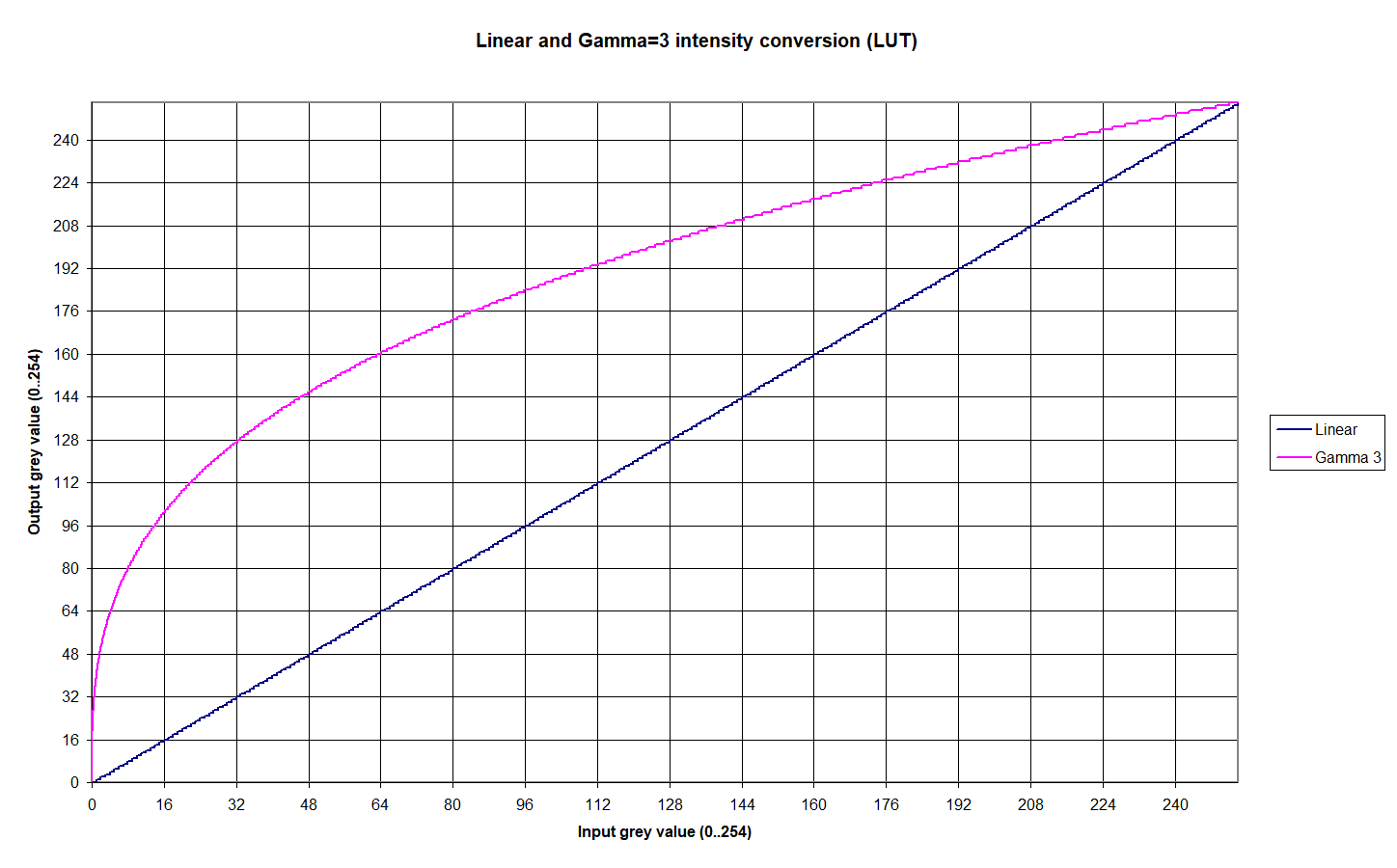
MOON 19h03 UTC 7 min. AFTER end of totality 6.8 degrees above horizon FTF2020M CCD camera Leica f=300mm obj. at f/D=16 Edmund Optics RGB-filters. Exposure: 1 second each. Shown with Gamma=3.0 |

|
Other (i.e. older) images of Moon eclipses: 2015: September 28: Eclipsed Moon in Pisces star field 2007: March: Total Lunar eclipse and Eclipsed Moon in Leo star field 2003: November 9: Gif-movie of eclipse and Earth shadow 2001: January 9: Eclipsed Moon |
| Solar spots from 24 August 2025 till 02 September 2025 |
|
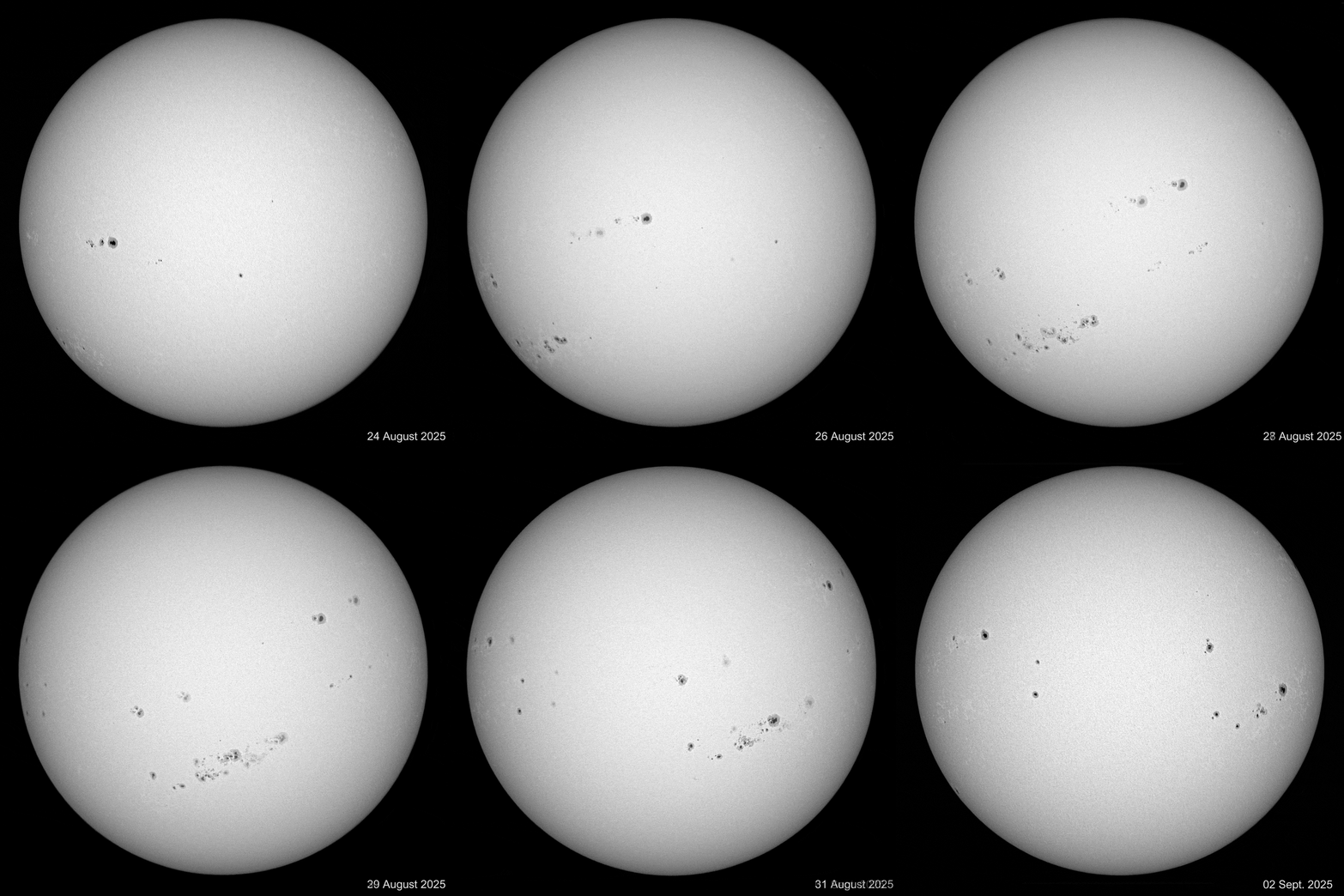
Leica f=300mm obj. at f/D=5.6 on small Fork-mount Baader AstroSolar Film OD=3.8 Raspberry Pi HQ camera G and B channels added Stack of 5 images Sharpened & unsharp masked Baader L-filter (IR-cutoff) Exposure time 0.3 millisec Click here to manually cycle through the images. |
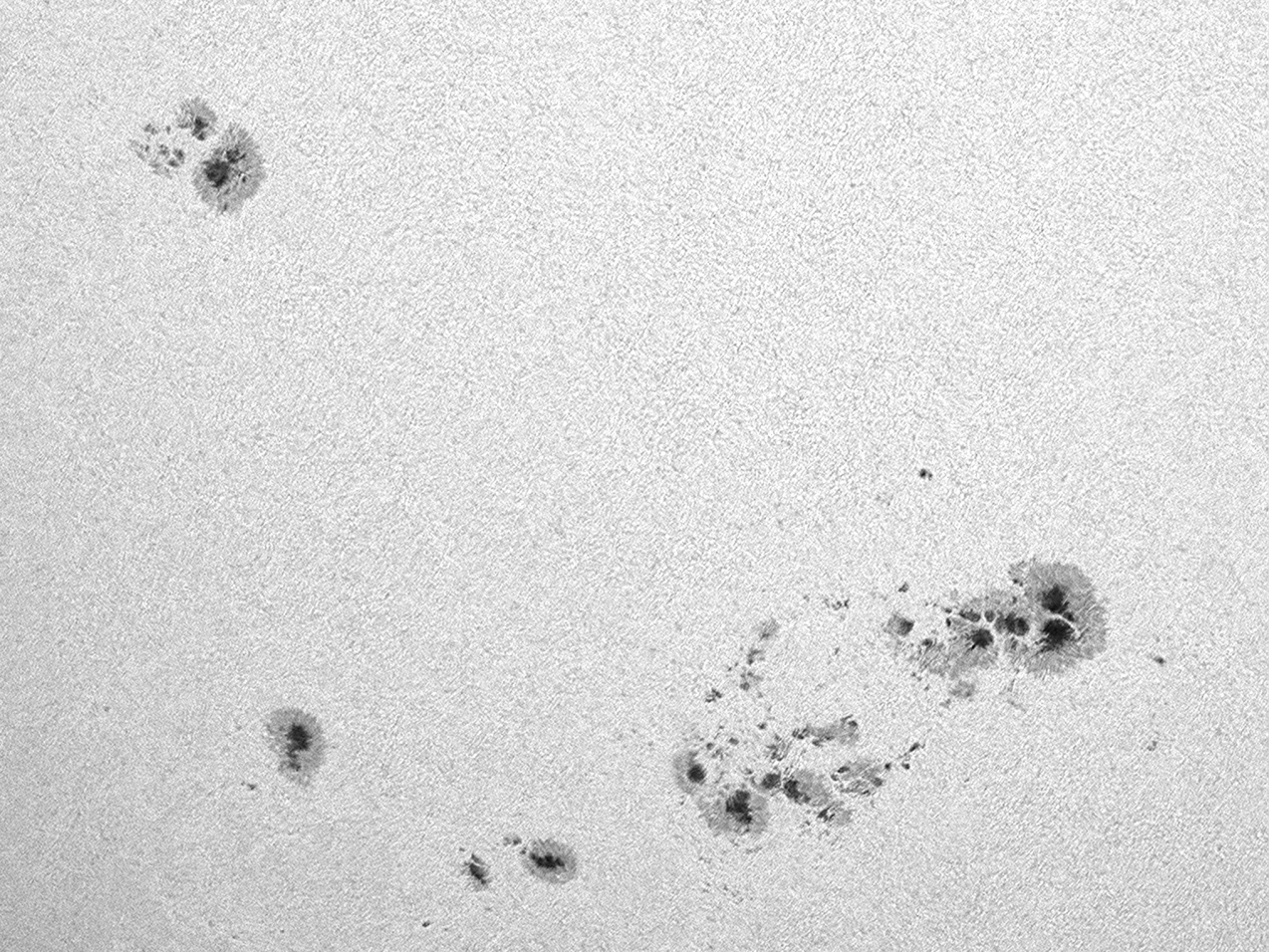 DETAIL OF SPOT GROUP 4195 - 4202, 29 AUGUST 2025 My first f=950mm Newton, f/D=6.3 on NEW Fork-mount (gif) One selected frame of 0.3 msec Baader AstroSolar Film OD=3.8 Raspberry Pi HQ camera R,G,B channels added |
| Partial solar eclipse 29 march 2025 |
 |
 |
PARTIAL SOLAR ECLIPSE 29 MARCH 2025 Left: 12u08 local time, near maximum. Top: 11u23, 11u46, 12u08, 12u33 and 12u47 Leica f=300mm telephoto lens at f/D=8.0 on Fork-mount Raspberry Pi HQ camera (G and B channels added) Baader L-filter (IR-cut-off) Lens covered with aluminized (partially transparent) mirror Exposure time 0.15 millisec |
 |
 |
| SUNSPOTS 3839 .. 3844 October 4, 2024 15cm Newton, f/D=6.3 (f=960mm) Raspberry Pi HQ camera with Balzers Calflex IR-blocking filter Telescope covered with 2 layers of Mylar sheet Exposure time 0.1 millisec |
ECLIPSED MOON IN PISCES STAR FIELD September 28, 2015 300mm Tele-objective F#4.0 FTF2020-M CCD with RGB-filter wheel Eclipsed Moon: 2 sec RGB Star field: 30 sec RGB FoV: 4.7x3.5 degrees |
| Moon with 15 times enhanced colours, 24 november 2007 |
25cm Newton with Barlow projection f/D=12; FTF1010-M CCD; MYC-filterwheel+10xND filter; Exp.time 0.05sec |
 |
 |
 |
 |
| NORTHERN HALF Note the area around Aristarchus, Copernicus, Plato, Aristillus, the material deposits around Copernicus and Kepler and the brown/blue colours of the Mares |
EASTERN DETAIL Note the reddish colour of Theophilis and the deposits around Proclus |
MARE TRANQUILLITATIS and Mare Serenitatis: Brown versus blue |
DETAIL OF AREA AROUND TYCHO Note the contrast in colour around and south-west of Tycho and the eastern and northern part of the image |

|
FULL MOON in colour, 2/3 february 2007 <-- Click on the image for a description of the image processing 25cm Newton, f/D=5.7, FTT1010-M CCD and RGB-filterset + 10xND Exposure: 35 msec; Colour enhanced 15 times |
 |
 |
 |
 |
| Total Lunar Eclipse 3/4 march 2007 15cm Newton, f/D=6.3 FTT1010-C color CCD Partial eclipsed Moon : 0.1-0.7sec with 1mm NG3 filter Fully eclipsed Moon: 3-5 sec |
Eclipsed Moon in Leo star field 3/4 march 2007 300mm Telelens F#5.5 FTF2020-M CCD RGB-filter Eclipsed Moon: 2 sec RGB Star field: 15 sec RGB FoV: 4.1x2.7 degrees |
Full moon in color 2/3 february 2007 25cm Newton, f/D=5.7 FTT1010-M CCD RGB-filter + 10xND Exposure: 2x35 msec Orginal color image Enhanced colors 15x |
Full moon and Saturn 2 february 2007 25cm Newton,f/D=5.7 FTT1010-M CCD R-filter + 10x ND Exposure: 40 msec Saturn enhanced 25 times |
| Transit of Venus. June 8, 2004 |
 |
8 june 2004, 9h44 UT 25cm Newton, f/D=5.7 with Mylar sheet FTT1010-M in prime focus Additional ND3, RG630 and IR filter Exposure: 0.1 seconds |
 |
8 june 2004, 5h39 UT Images separated by 15 seconds 25cm Newton, f/D=5.7 with Mylar sheet FTT1010-M in prime focus Additional ND3, RG630 and IR filter Exposure: 0.1 seconds |

 |
The black-drop effect is mainly caused by the (limited) resolution of the optical system and the image contrast (or contrast perception of the observer). More regarding this effect can be found here. |
 |
9 november 2003 FTT1010-Color CCD prime focus 15cm Newton f/D=6.3 10x ND-filter outside totality Exposure: 0.1 to 8 seconds |
 |
Eclipse 9 november 2003 (23u33, 00u26, 01u19, 02u12, 03u04 (UT)) FTT1010-Color CCD prime focus 15cm Newton f/D=6.3 10x ND-filter outside totality Exposure: 0.1 to 8 seconds |
 |
 |
210mm tele-objective, 200 ASA colour film This time no CCD image (although the CCD was used to scan the film) Left photo: 4u05 UT, near Gennep with the church of Hommersum on the sky line Right photo: 4u25 UT, near the same location. |
| Transit of Mercury. May 4, 2003 |
| Sun 4 may 2003 and transit of Mercury 7 may 2003: 25cm Newton and FTT1010-M CCD-camera using Barlow projection: Effective focal length f=3.4m, f/D=13. Filters: 1X Mylar screen in front of Newton, 1x ND3 in front of Barlow-lens, RG630 en IR afkapfilter in front of CCD. Illumination: 1 exposure of 50 milliseconds. Field of view appr. 0.2x0.2 degree. |
 |
 (Movie: 300kB) |
 |
 |
 |
| Groups of sunspots 4 may 2003, 14:00UT |
Transit of Mercury 7 may 2003, 10:15-10:31UT |
Transit of Mercury 7 may 2003, 09:30UT |
Transit of Mercury 7 may 2003, 10:20UT |
Transit of Mercury 7 may 2003, 10:30UT |
 |
Scope: 25cm Newton, f/D=46 CCD: FTT1010-M Exposure: 1 image of 0.1 sec Image is unsharp masked for more detail |
 |
Right: During totality, Left: End of eclips Scope and CCD: 15cm Newton with FT1020 colour-CCD in prime focus, f/D=6.3 Exposure: Sum of 4x30sec (due to dense cirrus clouds) |
 |
MOON: South part. Scope: 25cm Newton with Barlow projection f/D=13.1 CCD: FT1020 colour-CCD in binning mode Exposure: 0.2sec |
 |
MOON: View perpendicular on crater Tycho. This image is calculated from the above image by correcting for the perspective distortion as a result of the spherical shape of the moon. Details: See previous image. |
 |
Scope: f=950mm Newton at f/D=20 Filters: 2x Milar + 1x Aluminum mirror. CCD: FT1020 in black/white mode Exp.: Sum of 25 images of 0.5sec Remarks: Unsharp masked. |