 |
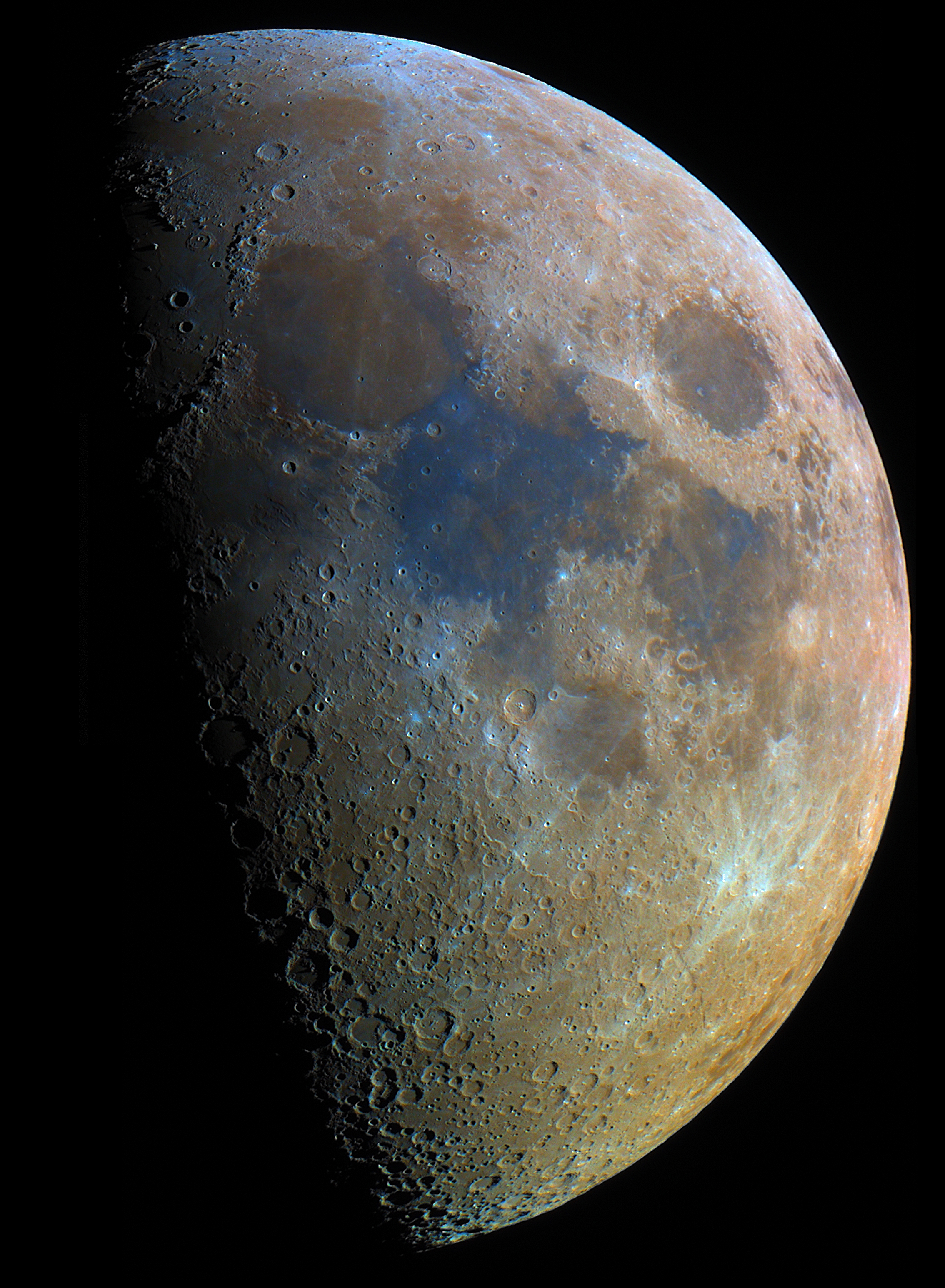
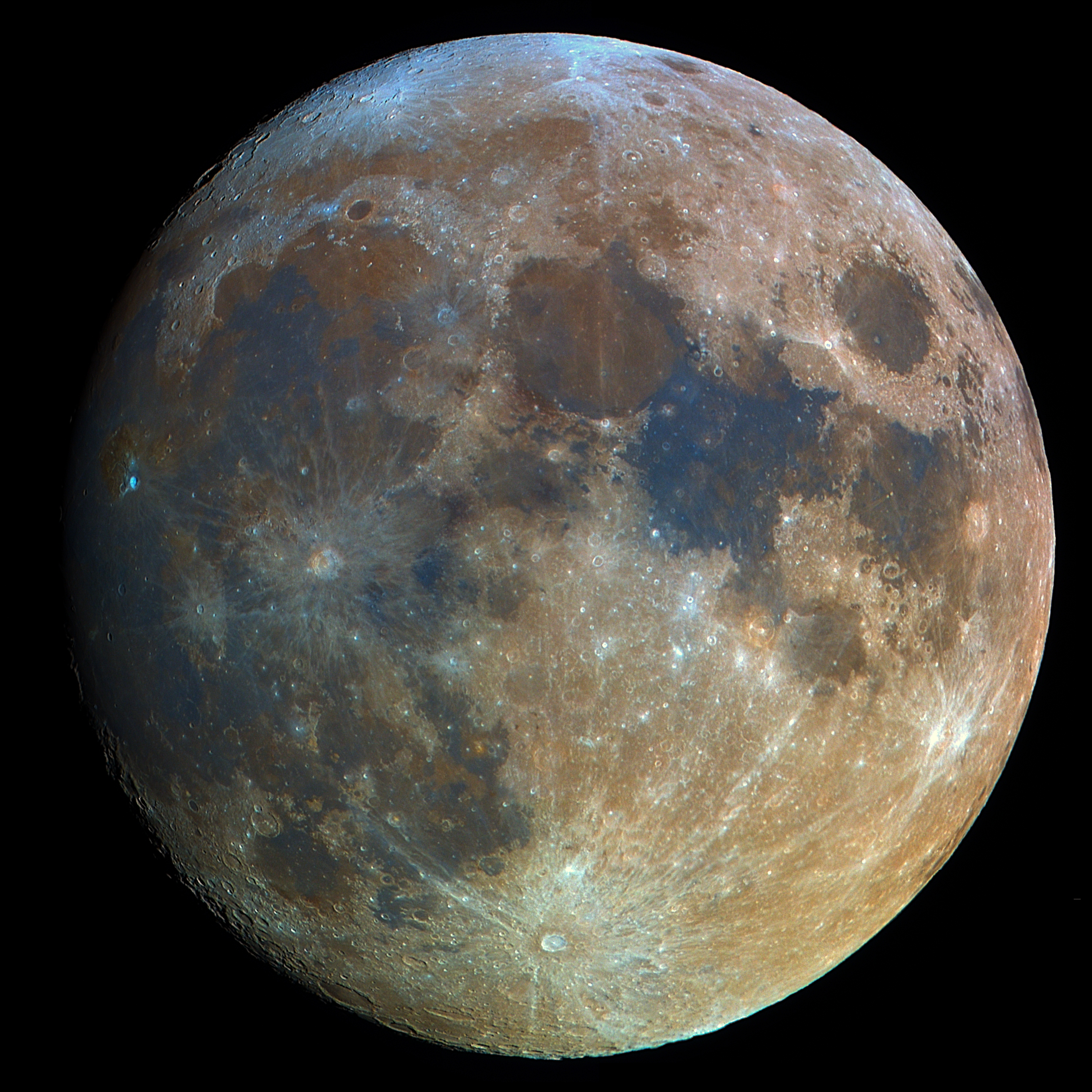
Raspberry Pi HQ camera in 2028x1520 pix, RAW 12bit mode. The camera's standard Hoya filter is replaced by a Baader Planetarium L-filter. Exposure time: 15msec per image. Image left (24 Apr 26): Three vertically stitched images. Image right (29 Apr 26): Mosaic of six images. L component is R+G+B of the best image and sharpened using a 4-connected Laplacian kernel (left) or Laplacian-of-Gaussian kernel (right). The RGB components are an average of 5 images. This reduces color noise. Color enhancement: After balancing R, G and B image intensities, to achieve a neutrally balanced RGB-image, color differences are enhanced according: R=RGBGain*(R-L_rgb)+L_rgb; G=RGBGain*(G-L_rgb)+L_rgb; B=RGBGain*(B-L_rgb)+L_rgb; where RGBGain=15 and L_rgb=0.299*R+0.587*G+0.114*B (following the eye sensitivity response). |
 |
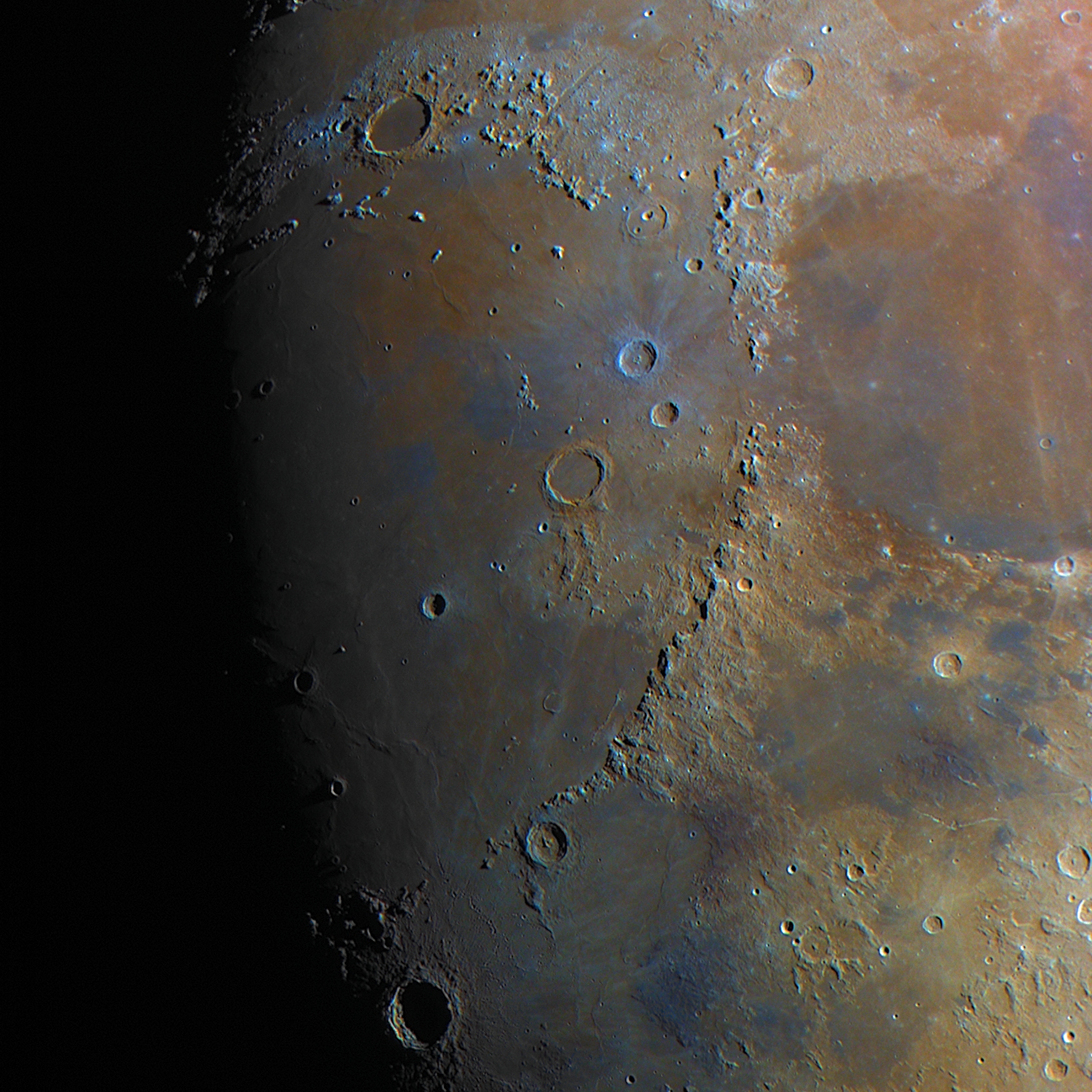 |
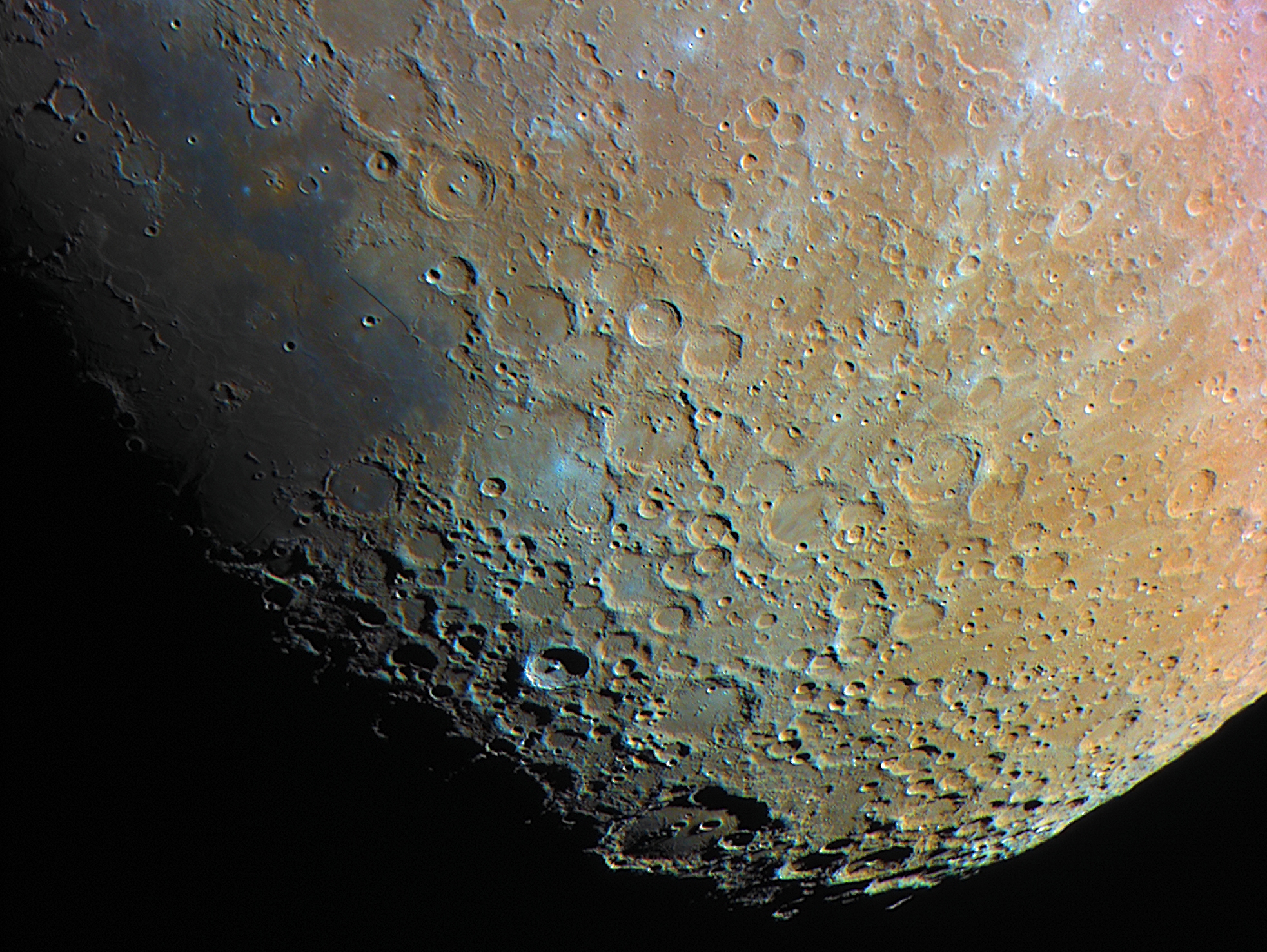
Same equipment and color enhancement Other telescope: f=1455mm, f/D=5.7 Newton, prime focus. Exposure time: 20msec per image. Image left : Mare Imbrium Image right: The cratered southern part L component is R+G+B of the best image and sharpened using a 4-connected Laplacian kernel. The RGB components are an average of 5 images to reduce color noise. |
 |